
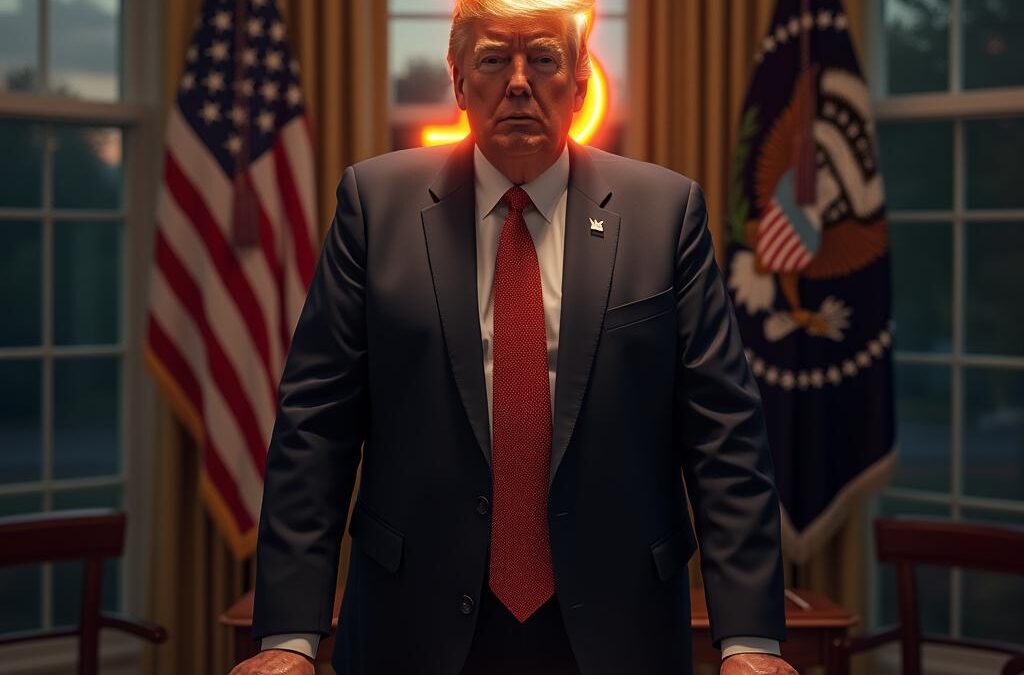
A Banking Expert Warns: Trump’s Crypto Policy Could Endanger the Entire Economy
In a move that has ignited fierce debate, former President Donald Trump’s recent cryptocurrency policies, including the signing of the GENIUS Act, have drawn sharp criticism from financial experts. These critics argue that Trump’s aggressive pro-crypto agenda, while ambitious, could expose the U.S. economy to significant risks.
At the heart of the controversy is the GENIUS Act, a landmark law signed on July 18, 2025. The legislation represents the first major overhaul of the U.S. cryptocurrency regulatory framework, aiming to position America as the “undisputed leader in digital assets.”
Trump’s administration has taken several key steps to promote digital assets. In his first week in office, he issued an executive order emphasizing support for the “responsible growth and use of digital assets, blockchain, and related technologies.” This included protecting citizens’ rights to access public blockchain networks, conduct mining and validation, and hold self-custodied assets.
One of the most contentious decisions was Trump’s prohibition of a U.S. Central Bank Digital Currency (CBDC). This move reversed earlier plans to explore a government-issued digital dollar, citing concerns over privacy and government overreach.
In March 2025, Trump further solidified his crypto-friendly stance by establishing a Strategic Bitcoin Reserve and a U.S. Digital Asset Stockpile. The Strategic Bitcoin Reserve consists of Bitcoin seized through criminal or civil forfeitures, while the Digital Asset Stockpile gathers other digital assets obtained similarly. However, the government cannot purchase new assets for these reserves, limiting growth to future seizures or penalties.
While the administration touts these measures as a way to unleash innovation and drive economic growth, banking and financial experts are sounding the alarm. They warn that the rapid deregulation and expanded support for stablecoins and digital assets could introduce new risks to the financial system.
Among the key concerns are increased financial volatility, dollar sovereignty risks, and regulatory gaps. Critics argue that the proliferation of stablecoins, if not properly regulated, could weaken traditional financial structures and create “dollar lookalikes” beyond federal oversight.
Additionally, experts caution that holding large amounts of Bitcoin and other digital assets as government reserves exposes the Treasury to the extreme price swings of cryptocurrency markets. This volatility could jeopardize the stability of the U.S. financial system, as these assets are far more unpredictable than traditional reserves like gold or government bonds.
There are also fears that expanding crypto’s role in the financial system could create opportunities for illicit actors to exploit regulatory loopholes, increasing the risk of money laundering and sanctions evasion.
Despite these warnings, the Trump administration remains steadfast in its approach, framing its strategy as a way to support “responsible” digital asset growth while upholding the global role of the U.S. dollar. The administration has also emphasized the importance of regulatory clarity and banking access for crypto-focused businesses.
For now, the debate over Trump’s crypto policies continues to intensify, with experts urging caution to prevent the U.S. economy from being exposed to unnecessary risks.
Trump’s Administration and Crypto: Key Moves
President Donald Trump has delivered forcefully on campaign promises to make the United States a global leader in digital assets and cryptocurrency technologies. In his first week in office, Trump issued an executive order to promote American leadership in digital assets, emphasizing support for the responsible growth and use of digital assets, blockchain, and related technologies. This includes protecting the rights of citizens and companies to access and use public blockchain networks, conduct mining and validation, transact without unfair censorship, and hold self-custodied assets.
Trump explicitly prohibited the creation of a US Central Bank Digital Currency (CBDC) out of concern for privacy and government overreach, reversing previous plans to explore a government-issued digital dollar. This decision has been a focal point of debate, with proponents arguing it prevents potential overreach while critics warn of missed opportunities for financial innovation.
The GENIUS Act: “Landmark” Crypto Law
On July 18, 2025, Trump signed the GENIUS Act into law. This marks the first major congressional overhaul of the US cryptocurrency regulatory environment. The legislation sets new rules for stablecoins—cryptocurrencies pegged to the value of the US dollar—and aims to spur investment and position the US as the “undisputed leader in digital assets.”
Trump and supporters argue these steps will unleash massive investment and innovation in the digital asset sector and ensure American dominance in this new financial frontier. The administration’s view is that this “revolution in financial technology” will drive economic growth and solidify American technological leadership.
Expert Concerns About Economic Risk
Despite the administration’s optimism, some banking and financial experts worry that Trump’s approach could destabilize the national—and even global—financial system. The core concerns include increased financial volatility, dollar sovereignty risk, and regulatory gaps.
- Increased financial volatility: Rapid deregulation and expanded support for stablecoins and other digital assets could introduce new risks and speculative excesses, which might undermine consumer confidence and market stability if not carefully managed.
- Dollar sovereignty risk: The focus on stablecoins and digital asset-friendly policies aims to reinforce the dollar’s dominance. However, if stablecoins not properly regulated proliferate, they could weaken traditional financial structures and, in crisis scenarios, create dollar “lookalikes” outside the reach of federal oversight.
- Regulatory gaps: While the GENIUS Act aims for regulatory clarity, the swift changes could also create loopholes, inconsistent enforcement, or uncertainty for established banks and consumers.
Critics highlight that holding and accumulating large amounts of Bitcoin and other digital assets as official government reserves exposes the Treasury to the wild price swings of cryptocurrency markets, possibly putting the stability of the reserve system at risk. These assets are far more volatile than traditional reserves like dollars, gold, or government bonds.
There are also worries that expanding the role of crypto in reserves and the broader financial system could make it easier for illicit actors to exploit regulatory blind spots, increasing the risk of money laundering or evasion of sanctions.
Trump’s Stated Policy Principles
The administration frames its strategy as supporting “responsible” digital asset growth, protecting access, encouraging innovation, and promoting regulatory clarity and banking access for crypto-focused businesses. Policies stress upholding the global role of the US dollar but also promoting lawful stablecoins as part of that effort.
Trump has ruled out a US CBDC, signaling a philosophical divide with previous administrations that considered central bank–backed digital money.
Congressional Context
Congress has also been active, with multiple landmark bills—such as the GENIUS Act, the CLARITY Act, and the Anti-CBDC Surveillance State Act—considered in what legislators informally dubbed “Crypto Week.” The bipartisan action underscores how rapidly digital assets have moved to the center of political and economic debate in Washington.
Conclusion
Trump’s crypto policy, particularly the GENIUS Act and the prohibition of a U.S. Central Bank Digital Currency, represents a bold yet contentious shift in the nation’s approach to digital assets. While the administration frames these moves as a way to drive innovation and solidify American leadership in the global financial landscape, critics warn of significant risks to financial stability. The debate over these policies underscores the delicate balance between fostering technological advancement and safeguarding the economy from potential volatility and regulatory gaps. As the U.S. ventures further into this uncharted territory, the long-term implications of Trump’s crypto-friendly agenda will likely remain a focal point of economic and political discourse.
Frequently Asked Questions
What is the GENIUS Act?
The GENIUS Act is a landmark legislation signed into law by President Trump on July 18, 2025. It overhauls the U.S. cryptocurrency regulatory framework, aiming to position the U.S. as the “undisputed leader in digital assets.” The law sets new rules for stablecoins and seeks to spur investment and innovation in the digital asset sector.
Why did Trump prohibit a U.S. Central Bank Digital Currency (CBDC)?
Trump prohibited the creation of a U.S. CBDC, citing concerns over privacy and government overreach. This decision reversed earlier plans to explore a government-issued digital dollar, reflecting a philosophical divide with previous administrations that considered central bank–backed digital money.
What are the key risks associated with Trump’s crypto policies?
Experts highlight several risks, including increased financial volatility due to rapid deregulation, dollar sovereignty risks from unregulated stablecoins, and regulatory gaps that could create opportunities for illicit activities like money laundering and sanctions evasion. Additionally, holding large amounts of Bitcoin and other digital assets as government reserves exposes the Treasury to extreme price swings in cryptocurrency markets.
How does Trump’s administration respond to concerns about financial stability?
The administration frames its crypto strategy as supporting “responsible” digital asset growth while upholding the global role of the U.S. dollar. Trump emphasizes regulatory clarity, banking access for crypto-focused businesses, and the importance of innovation in financial technology to drive economic growth.
What is the significance of the Strategic Bitcoin Reserve and the U.S. Digital Asset Stockpile?
The Strategic Bitcoin Reserve and the U.S. Digital Asset Stockpile are initiatives established by Trump to accumulate digital assets seized through criminal or civil forfeitures. These reserves aim to bolster the U.S. position in the digital asset space, though they are limited to assets obtained through seizures and penalties, not new purchases.
How might Trump’s crypto policies impact the global financial system?
Trump’s policies could have far-reaching implications for the global financial system. Critics warn that the rapid expansion of stablecoins and digital assets could introduce systemic risks, undermine traditional financial structures, and create regulatory challenges. Conversely, supporters argue that these moves will cement U.S. leadership in financial innovation and drive global economic growth.