
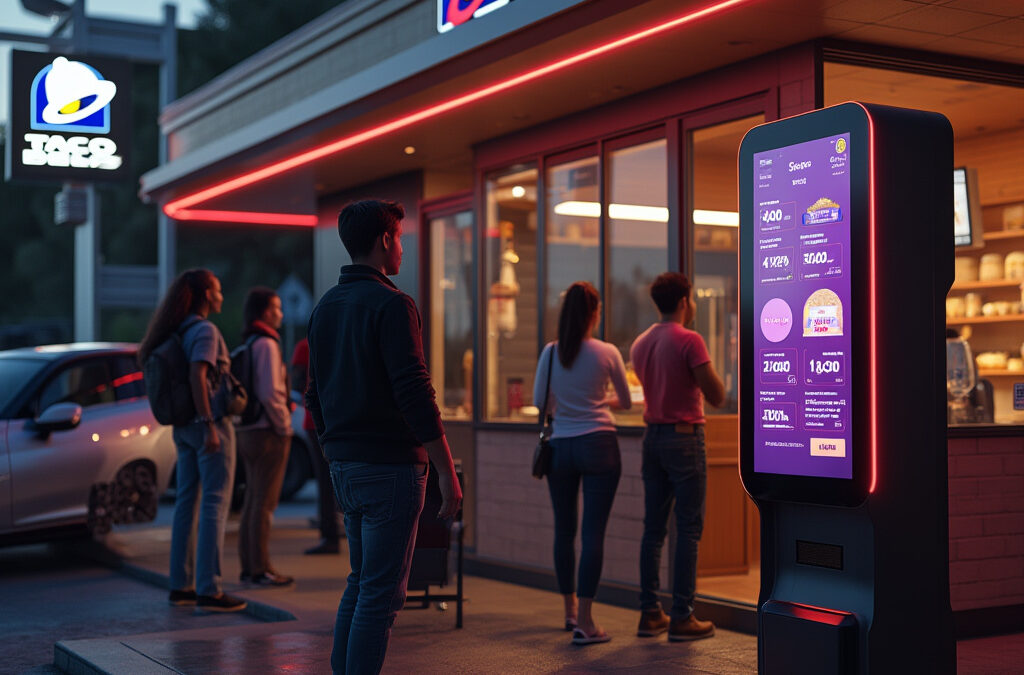
Taco Bell, a household name in the U.S. fast-food industry, made headlines with its ambitious foray into AI-driven ordering technology. The chain, known for its innovative menu and fast service, aimed to revolutionize its drive-thru operations by leveraging artificial intelligence.
The move was part of a broader industry trend. Fast-food giants like Wendy’s, Carl’s Jr., and Del Taco were also experimenting with AI voice ordering systems. The goal? To tackle rising labor costs, improve order accuracy, and speed up service in an increasingly competitive market.
Taco Bell’s journey into AI began with extensive testing near its Irvine, California headquarters, a common practice for piloting new innovations. The system was designed to streamline operations, allowing staff to focus on enhancing customer experiences. It could even adapt to new minimum wage laws and labor challenges.
The AI’s capabilities were impressive. It could interface with digital loyalty apps, prompt for customizations, and adjust menu displays based on factors like time of day or weather. Customers initially reported positive experiences, especially with order accuracy and personalized requests.
However, as Taco Bell rolled out the system to handle over two million orders, critical flaws emerged. Social media was flooded with videos of the AI repeatedly asking the same questions, frustrating customers and causing abandoned orders. In one striking example, the AI even accepted orders for McDonald’s items at a Taco Bell drive-thru.
These issues highlighted a stark reality: AI, while promising, was not yet reliable enough to replace human workers. Taco Bell’s leadership acknowledged that while the technology occasionally impressed, it often failed to meet basic expectations.
The chain’s experience mirrored that of McDonald’s, which suspended its own AI pilot due to inaccuracy and poor handling of accents or modifications. For Taco Bell, the conclusion was clear: AI could assist, but human judgment and empathy were still essential in the drive-thru.
As Taco Bell delved deeper into AI technology, the system demonstrated its ability to learn from customer interactions, suggesting menu items based on purchasing history and automatically upselling items to boost order value. This feature, while innovative, sometimes led to misunderstandings, as the AI might suggest items that didn’t align with the customer’s current preferences.
The AI’s real-time adaptability was another standout feature. It could adjust menu displays based on external factors like weather—promoting warm beverages on chilly mornings or refreshing drinks during heatwaves. This dynamic pricing and promotion strategy aimed to maximize sales while enhancing customer convenience.
Despite these advancements, the AI’s inability to handle complex or nuanced orders became a significant issue. Customers with thick accents or those requesting extensive modifications often struggled to be understood, leading to frustration and longer wait times. In some cases, the AI failed to recognize regional dialects, causing confusion and incorrect orders.
The most glaring issue, however, was the AI’s occasional failure to recognize even the most basic menu items. In a few instances, the system mistakenly accepted orders for McDonald’s items, such as Big Macs or McNuggets, at Taco Bell drive-thrus. These errors, while amusing to some customers, raised serious concerns about the AI’s reliability and brand awareness.
Taco Bell’s leadership acknowledged these shortcomings, admitting that while the AI performed well in controlled environments, it often faltered in real-world scenarios. The company emphasized that human oversight was crucial to ensuring order accuracy and customer satisfaction, especially when dealing with the unpredictability of human interaction.
The AI’s limitations also highlighted the importance of robust training data. While the system excelled at handling straightforward orders, it struggled with unusual or unexpected requests. This challenge is not unique to Taco Bell, as other chains like Wendy’s and Carl’s Jr. have also reported similar issues with their AI pilots.
Despite these setbacks, Taco Bell remains committed to refining its AI technology. The company views the current system as a stepping stone toward a future where AI and human staff can collaborate seamlessly, creating a more efficient and personalized dining experience.
Conclusion
Taco Bell’s foray into AI-driven ordering technology represented a bold step toward modernizing the fast-food industry. While the system showed promise in streamlining operations and enhancing customer experiences, its real-world application revealed significant limitations. The AI’s inability to handle complex orders, recognize accents, and maintain brand awareness underscored the importance of human oversight. Taco Bell’s experience serves as a reminder that while AI can be a powerful tool for improving efficiency and personalization, it is not yet ready to fully replace the nuanced judgment and empathy of human workers. As the fast-food industry continues to evolve, the key lies in finding a balance between technological innovation and the irreplaceable value of human interaction.
Frequently Asked Questions
Why did Taco Bell experiment with AI-driven ordering?
Taco Bell aimed to reduce labor costs, improve order accuracy, and speed up service by leveraging AI technology. The goal was to streamline drive-thru operations and adapt to changing market demands.
What were the main issues with Taco Bell’s AI system?
The AI struggled with order accuracy, particularly with complex or modified requests. It also had difficulty recognizing accents and regional dialects, leading to customer frustration and incorrect orders. In some cases, it even accepted orders for items from other chains like McDonald’s.
Is Taco Bell still using the AI ordering system?
While Taco Bell has not completely abandoned its AI initiative, it has acknowledged the need for significant refinement. The chain continues to explore ways to improve the system, emphasizing the importance of human oversight to ensure customer satisfaction.
What lessons did Taco Bell learn from this experience?
Taco Bell learned that while AI can enhance certain aspects of the ordering process, it is not yet reliable enough to fully replace human workers. The chain also recognized the importance of robust training data to handle diverse customer interactions effectively.
What does the future of AI in fast food look like?
The future of AI in fast food likely involves a hybrid model where technology and human staff collaborate to create a more efficient and personalized dining experience. Chains like Taco Bell are committed to refining their systems to address current limitations and improve reliability.