
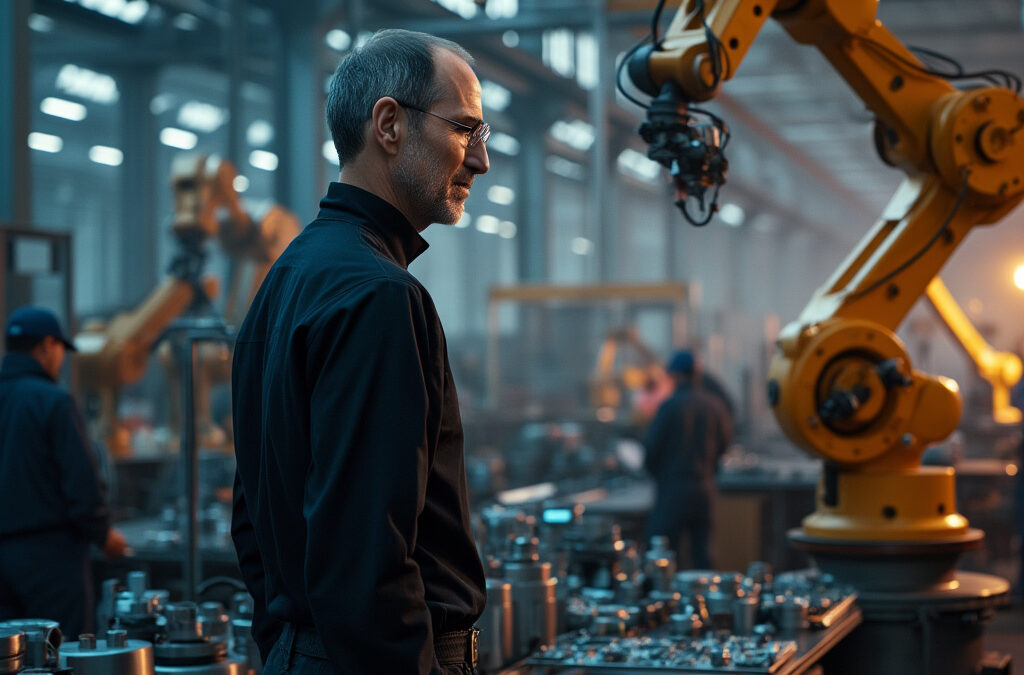
14 Years Ago, Steve Jobs Explained Why iPhones Can’t Be Made in America. It’s Worth Revisiting Today
Steve Jobs’ Perspective on American Manufacturing and Its Ongoing Relevance
In 2011, Steve Jobs, the visionary co-founder of Apple, made a statement that continues to resonate in discussions about America’s industrial future. During a dinner with President Barack Obama and other tech leaders, Jobs was asked what it would take to bring Apple’s manufacturing jobs back to the U.S. His response was blunt: “Those jobs aren’t coming back.”
The Famous Quote and Its Context
Jobs’ remarks were not just a commentary on the state of manufacturing at the time. They reflected a deeper understanding of the global economic landscape. He pointed to the immense scale and flexibility of China’s manufacturing ecosystem, which had evolved into a powerhouse of production. While American factories struggled to adapt, Chinese facilities could mobilize thousands of workers overnight to meet demand or implement design changes.
Why Jobs Believed U.S. Manufacturing Had Fallen Behind
Jobs’ assessment went beyond the obvious allure of low wages abroad. He highlighted the sophistication of China’s manufacturing infrastructure, which included a deeply integrated supply chain and a skilled labor force. American manufacturing, he argued, had lost more than just jobs—it had forfeited a culture of craftsmanship, agility, and industrial coordination that once made it a global leader.
Broader Implications for Innovation and Economic Policy
Today, Jobs’ words serve as a cautionary tale about the risks of outsourcing critical manufacturing capabilities. The U.S. remains a powerhouse of innovation, designing cutting-edge technologies like the iPhone. However, its reliance on foreign production has exposed vulnerabilities, particularly during global crises like the COVID-19 pandemic, which disrupted supply chains worldwide.
Efforts to Change Course
In recent years, there has been a growing push to revive American manufacturing, particularly in strategic sectors like semiconductors and electric vehicles. Policymakers have introduced incentives to encourage domestic production, aiming to create jobs and rebuild the nation’s industrial prowess. However, experts warn that replicating the scale and efficiency of foreign manufacturing hubs is no easy feat. It requires significant investment, policy support, and a cultural shift to prioritize manufacturing excellence.
The Enduring Lesson from Jobs
Steve Jobs’ legacy extends far beyond his iconic products. His insights into the importance of manufacturing highlight a critical truth: innovation alone is not enough. Without a robust, flexible, and skilled manufacturing base, even the most groundbreaking ideas risk failing to reach their full potential. As the U.S. grapples with economic and geopolitical challenges, Jobs’ warning remains as relevant as ever—a reminder that American prosperity depends on rebuilding its industrial strength.
The Ecosystem and Supply Chain Advantage
Jobs’ observations also highlighted the critical role of a well-developed manufacturing ecosystem and supply chain. He noted that China’s success in manufacturing was not just about low labor costs but also about the seamless integration of suppliers, component manufacturers, and assemblers. This ecosystem allowed for unprecedented speed and efficiency, enabling companies like Apple to scale production rapidly and adapt to market demands with minimal delays.
The Speed and Flexibility of Chinese Manufacturing
One of Jobs’ most striking points was the ability of Chinese factories to mobilize thousands of workers overnight. This level of flexibility was unparalleled in the U.S., where labor markets and regulatory environments made such rapid scaling nearly impossible. For example, Jobs cited the ability of Chinese manufacturers to implement design changes or produce new components with remarkable speed, giving them a significant competitive edge.
Lessons from the COVID-19 Pandemic
The COVID-19 pandemic brought into sharp focus the vulnerabilities of global supply chains. As countries around the world struggled to maintain production and distribution, the limitations of relying on overseas manufacturing became clear. Jobs’ warning about the risks of outsourcing critical manufacturing capabilities resonated anew, as disruptions in China and other manufacturing hubs caused delays and shortages of essential goods.
The Role of Government Policy and Incentives
While private-sector innovation remains a cornerstone of American economic strength, Jobs’ insights underscored the importance of government policy in shaping the manufacturing landscape. In recent years, there has been a growing recognition of the need for targeted incentives and investments to rebuild domestic manufacturing capacity. From tax breaks for companies that bring production back to the U.S. to funding for workforce training programs, policymakers are exploring a range of strategies to revitalize American industry.
Rebuilding a Culture of Manufacturing Excellence
Jobs’ critique of American manufacturing also touched on the cultural dimensions of industrial decline. He argued that the U.S. had lost not just the physical infrastructure of manufacturing but also the collective knowledge and expertise that once made it a global leader. Rebuilding this culture of excellence requires more than just financial investment; it demands a renewed commitment to vocational training, engineering education, and innovation at the factory floor level.
The Interplay Between Design and Production
One of the key lessons from Jobs’ perspective is the interdependence of design and production. While the U.S. has maintained its leadership in product design and innovation, the separation of these two functions has created challenges. Jobs believed that proximity between designers and manufacturers fosters collaboration and accelerates the iterative process of bringing new ideas to market. This is an area where American companies are now seeking to improve, recognizing that the integration of design and production is critical to maintaining a competitive edge.
Global Competition and the Future of Manufacturing
As global competition intensifies, the debate over the future of American manufacturing continues to evolve. Jobs’ remarks serve as a reminder that the U.S. cannot afford to be complacent in the face of rapidly changing global economic dynamics. While the challenges are significant, there is also an opportunity for the U.S. to redefine its role in the global manufacturing landscape, leveraging its strengths in technology and innovation to build a more resilient and competitive industrial base.
Conclusion
Steve Jobs’ assertion that iPhone manufacturing jobs would not return to America underscores critical insights into global economics and manufacturing. His perspective highlighted China’s advanced ecosystem, emphasizing scale, flexibility, and cost advantages. The implications for U.S. innovation and economic policy are significant, as recent efforts to revive domestic manufacturing face challenges in replicating China’s infrastructure. Jobs’ lessons stress the importance of a robust manufacturing base and the interplay between design and production, offering a roadmap for future U.S. industrial strategy.
What did Steve Jobs say about manufacturing iPhones in America?
Steve Jobs stated that iPhone manufacturing jobs would not return to the U.S., citing China’s superior manufacturing ecosystem and infrastructure.
Why did Jobs believe those jobs wouldn’t come back?
Jobs attributed this to China’s scale, skilled labor, and integrated supply chains, which the U.S. couldn’t match due to higher costs and regulatory barriers.
What role did China’s manufacturing ecosystem play?
China’s ecosystem offered seamless integration of suppliers and rapid production scaling, providing efficiency and adaptability that the U.S. couldn’t replicate.
How did the COVID-19 pandemic affect this issue?
The pandemic exposed vulnerabilities in global supply chains, highlighting the risks of overseas manufacturing and reinforcing Jobs’ concerns about outsourcing.
What efforts are being made to revive U.S. manufacturing?
Current initiatives include government incentives, tax breaks, and workforce training programs to rebuild domestic capacity, especially in strategic sectors.
What cultural aspects did Jobs mention?
Jobs noted a decline in U.S. manufacturing culture, emphasizing the need for renewed commitment to vocational training and innovation to regain global leadership.
How do design and production interrelate?
Proximity between designers and manufacturers fosters collaboration and accelerates product development, a factor the U.S. is now addressing to enhance competitiveness.
What is the future of U.S. manufacturing?
The U.S. aims to leverage its innovation strengths to redefine its manufacturing role, focusing on technology and resilience to compete globally.