
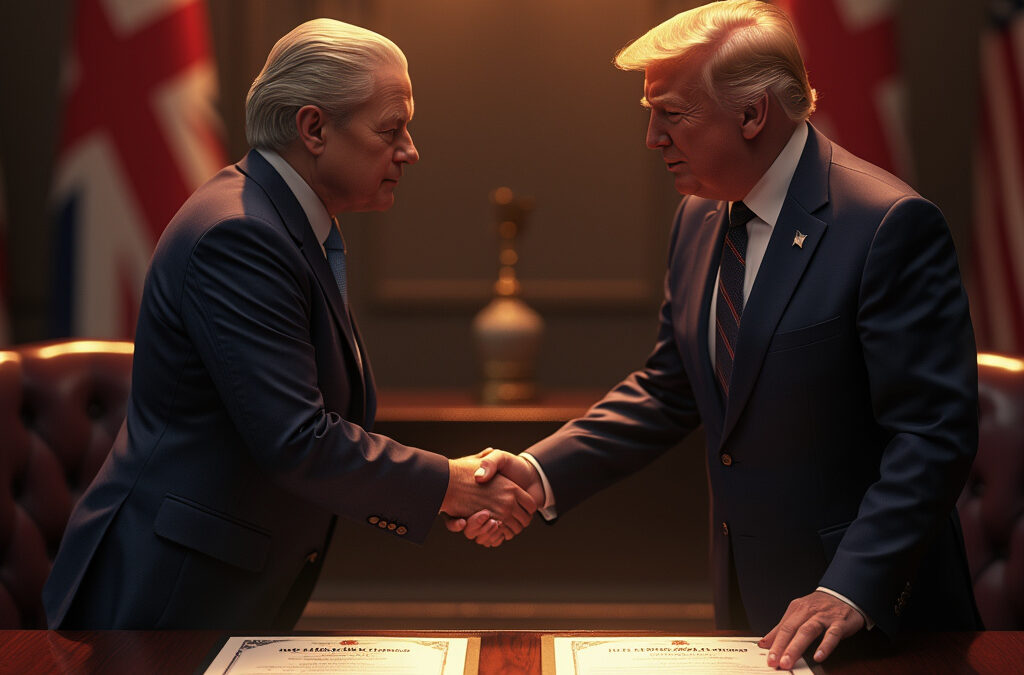
Trump Just Kept 10 Percent Tariffs on the U.K. but Will Cut Taxes on British Cars, Steel, and Aluminum
In a move that underscores the evolving landscape of U.S.-U.K. trade relations, former President Donald Trump announced on April 2, 2025, that the United States will maintain a 10 percent tariff on all imports from the United Kingdom. This decision comes as part of the “Economic Prosperity Deal,” a trade agreement that reflects a significant shift in U.S. trade policy under the Trump administration.
While the 10 percent tariff represents a reduction from some earlier rates—such as the 27.5 percent tariff previously applied to British automobiles—it signals a departure from the lower, pre-Trump administration rates that averaged around 3 percent. This new baseline tariff applies uniformly to all British imports, including steel and aluminum, which had previously been subject to varying levels of duties.
The agreement also brings some relief for specific industries. Notably, tariffs on British aluminum have been entirely removed, while those on automobiles have been significantly reduced. However, the overarching 10 percent tariff remains in place, ensuring that British goods entering the U.S. market will still face a higher cost burden compared to pre-Trump era levels.
This deal marks a notable divergence from the U.S.’s prior commitments under the World Trade Organization (WTO) rules, particularly the Most Favored Nation (MFN) principle, which aimed to cap tariff rates. By unilaterally raising the baseline tariff to 10 percent, the U.S. is effectively altering its approach to international trade, a move that could have far-reaching implications for global trade dynamics.
From the U.S. administration’s perspective, the agreement is being framed as a “maxed out deal,” emphasizing the use of fixed tariffs as a negotiating tool to secure favorable terms in future trade agreements. However, experts and international observers have expressed mixed views, with some warning that the deal’s rigid tariff structure could create economic challenges for businesses and consumers on both sides of the Atlantic.
Implications of the Agreement
The maintenance of the 10 percent tariff on British imports signals a tough stance by the U.S. in its trade negotiations, leaving the U.K. in a similar position to before the announcement. This outcome sets a precedent for how other trade agreements may be handled in the future, as the U.S. continues to prioritize a strong negotiating position with fixed tariffs as leverage.
Economically, while the reduced tariff on British cars and the removal of some tariffs on aluminum provide some relief for U.S. businesses and consumers, the continued tariff burden means imports are still more expensive. This could lead to higher costs being passed on to consumers, creating economic headwinds for importers and consumers on both sides of the Atlantic.
On a global scale, the U.S.’s unilateral decision to raise the baseline tariff to 10 percent and enforce it in the U.K. deal effectively alters its WTO commitments. This shift could encourage other countries to adopt similar tariff policies, complicating future multilateral trade negotiations and potentially leading to a more fragmented global trade landscape.
Reactions and Perspectives
From the U.S. administration’s viewpoint, the deal is portrayed as a “maxed out deal” that can serve as a model for subsequent trade agreements. The administration emphasizes the use of fixed tariffs as a negotiating tool to secure favorable terms in future negotiations, highlighting the deal’s potential to strengthen the U.S.’s position in international trade.
However, experts and some international observers have expressed mixed views on the deal. While acknowledging the relief provided by reduced tariffs on specific products, many warn that the deal’s rigid tariff structure could create economic challenges for businesses and consumers on both sides. The lack of further concessions and the continued high tariff levels are seen as less advantageous, potentially limiting the deal’s overall economic benefits.
Conclusion
The decision to maintain a 10 percent tariff on British imports while reducing taxes on specific products like cars, steel, and aluminum reflects a strategic approach by the U.S. to rebalance its trade relations with the U.K. This move, part of the “Economic Prosperity Deal,” marks a significant shift in U.S. trade policy, prioritizing a stronger negotiating position in international trade agreements.
While the reduction in tariffs on certain goods provides some economic relief, the overarching 10 percent tariff underscores a tougher stance by the U.S. This decision has sparked mixed reactions, with some viewing it as a pragmatic step toward future trade negotiations, while others caution against potential economic challenges for businesses and consumers on both sides of the Atlantic.
As the global trade landscape continues to evolve, the implications of this agreement will likely resonate beyond U.S.-U.K. relations, potentially influencing broader international trade dynamics and the adherence to WTO principles. The balance between economic relief and continued tariff burdens will be a critical factor in assessing the long-term impact of this deal.
Frequently Asked Questions
How does the 10 percent tariff affect British imports?
The 10 percent tariff applies uniformly to all British imports, including goods such as steel, aluminum, and automobiles. While this represents a reduction from some earlier rates, it is higher than pre-Trump era levels, increasing the cost burden for U.S. consumers and businesses importing British goods.
Which British products will see reduced taxes?
Tariffs on British aluminum have been entirely removed, while tariffs on automobiles have been significantly reduced. However, a 10 percent tariff remains in place for all other British imports, ensuring a higher cost burden compared to pre-Trump era levels.
Why did Trump set a 10 percent tariff on British imports?
The 10 percent tariff is part of the “Economic Prosperity Deal,” which aims to strengthen the U.S.’s negotiating position in future trade agreements. The U.S. views this fixed tariff as a tool to secure favorable terms in international trade negotiations.
How does this deal affect the U.S.’s commitments under WTO rules?
The deal alters the U.S.’s approach to international trade, potentially violating the Most Favored Nation (MFN) principle under WTO rules. By unilaterally raising the baseline tariff to 10 percent, the U.S. is diverging from its prior commitments, which could have far-reaching implications for global trade dynamics.
What are the economic implications of this agreement?
The agreement could lead to higher costs for U.S. businesses and consumers due to the continued tariff burden. While some industries may experience relief from reduced tariffs, the overall economic impact remains uncertain, with potential challenges for importers and consumers on both sides of the Atlantic.