
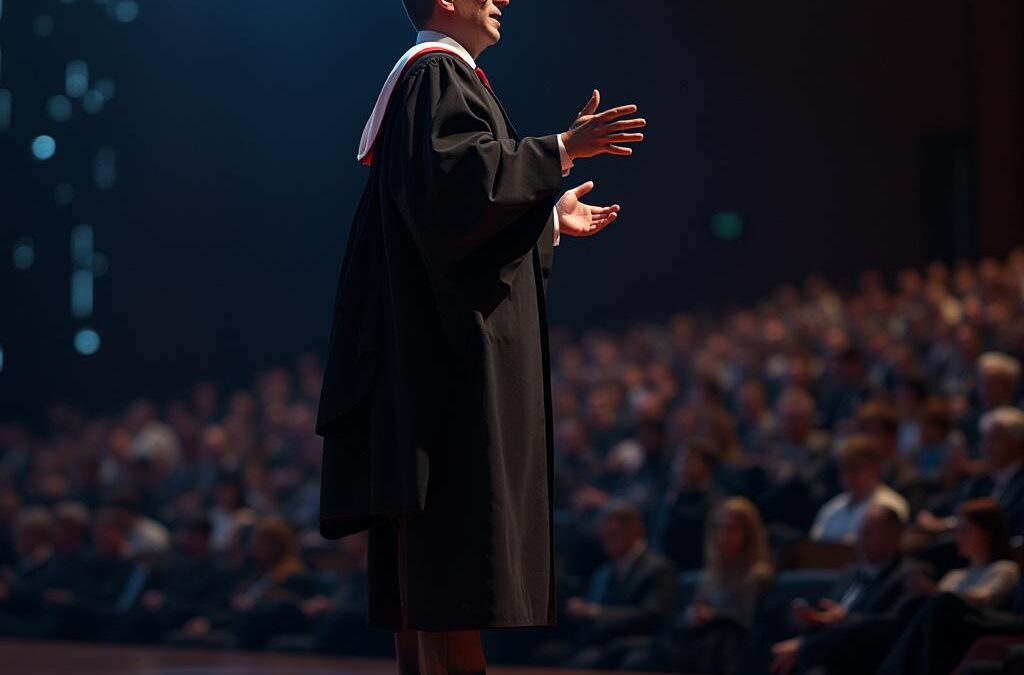
How Stanford University PhD Graduates Proved the Importance of the Elevator Pitch
Stanford University, renowned for its innovative spirit, recently showcased its PhD graduates demonstrating the power of the elevator pitch through the Three Minute Thesis Competition. This event required participants to present their complex research succinctly, without jargon or props, and included a unique twist—a walk-on song to introduce themselves.
The Challenge: Condensing Complexity
Imagine condensing years of intricate research into a mere three minutes. Stanford’s graduates faced this daunting task, aiming to convey their work’s significance and impact clearly and compellingly to a broad audience.
Why the Elevator Pitch Matters
The elevator pitch, a staple for entrepreneurs, is more than a networking tool; it’s a discipline for conveying ideas persuasively. This exercise highlights the importance of clear communication in sparking interest and continuing the conversation beyond the initial pitch.
Building Habits of Clarity and Persuasion
By eliminating technical language and visual aids, participants focused on connecting their research to real-world impacts. This approach made their work accessible and engaging, demonstrating the effectiveness of clear communication.
The Broader Implication
The skills developed extend beyond academia, proving essential in various fields. The ability to summarize and communicate core ideas is crucial for success, whether persuading investors or informing the public.
Stanford’s example underscores the value of mastering the elevator pitch, offering a lesson in clear communication for anyone with ambitious projects in a fast-paced world.
Source: INC.com
How Stanford PhD Graduates Proved the Importance of the Elevator Pitch
From Specialists to Storytellers
The Three Minute Thesis Competition at Stanford University not only tested the participants’ ability to simplify their research but also transformed them from specialists into storytellers. By removing the crutches of jargon and visual aids, the competition forced participants to connect their work to universal themes and real-world impacts. This shift from technical details to broader narratives made their research accessible and meaningful to a diverse audience.
A Skill for the Real World
The skills honed through this exercise extend far beyond the academic realm. Whether pitching to investors, explaining research to colleagues, or communicating with the public, the ability to distill complex ideas into clear, persuasive language is invaluable. Stanford’s approach demonstrates that even the most technical or specialized work can be made compelling and clear with the right discipline.
Conclusion
The Three Minute Thesis Competition at Stanford University vividly demonstrates the transformative power of the elevator pitch. By distilling complex research into engaging, jargon-free presentations, PhD graduates showcased the importance of clear communication in conveying ideas effectively. This exercise went beyond academic confines, highlighting a universal skill essential for success in various fields.
The ability to simplify complex concepts and connect them to real-world impacts is a valuable discipline, whether for entrepreneurs, researchers, or professionals. Stanford’s approach underscores that mastering the elevator pitch is not just about brevity but about clarity, persuasion, and the ability to spark meaningful conversations.
FAQ
What is the Three Minute Thesis Competition?
The Three Minute Thesis Competition is an event where PhD graduates present their complex research in just three minutes, without jargon or visual aids, to a broad audience. It includes a unique twist—a walk-on song to introduce themselves.
Why is the elevator pitch important?
The elevator pitch is crucial because it teaches the discipline of conveying ideas persuasively and clearly. It helps in sparking interest and continuing the conversation beyond the initial pitch, making it a valuable skill for various professions.
How did Stanford PhD graduates prepare for the Three Minute Thesis Competition?
Participants focused on connecting their research to universal themes and real-world impacts, avoiding technical language and visual aids. This approach made their work accessible and engaging to a diverse audience.
What are the broader implications of the Three Minute Thesis Competition?
The skills developed through this exercise extend beyond academia, proving essential in fields like business, communication, and public speaking. The ability to summarize and communicate core ideas clearly is crucial for success in a fast-paced world.