
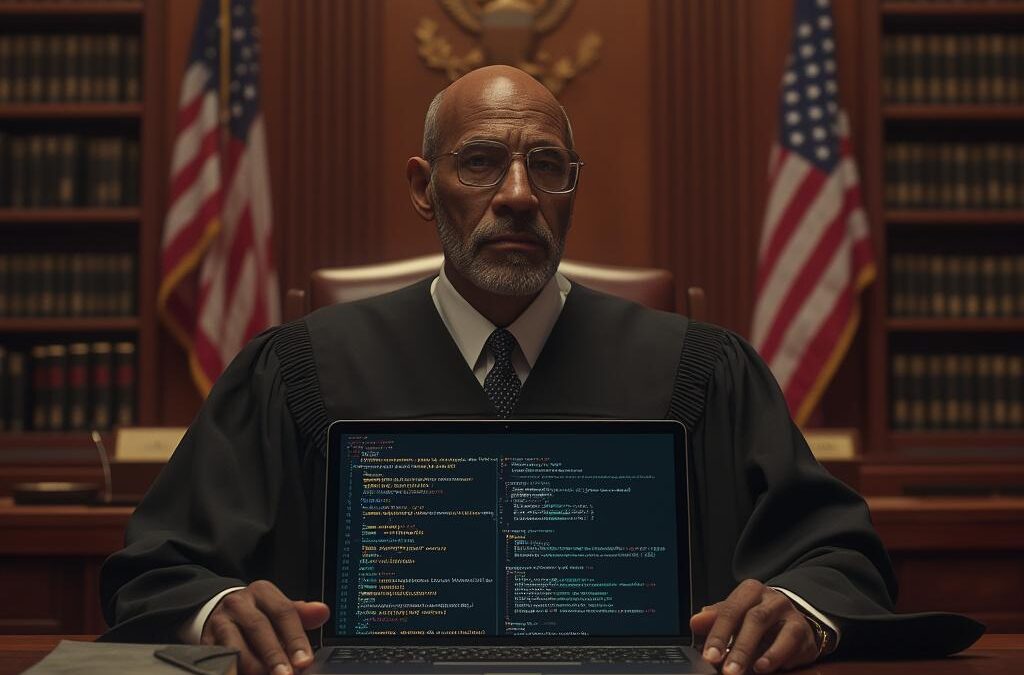
Anthropic Wins Key Ruling on AI in Authors’ Copyright Lawsuit
In a significant legal milestone for the AI industry, a U.S. federal judge has ruled in favor of Anthropic, the company behind the Claude chatbot, in a high-profile copyright dispute with authors. The case centered on whether training generative AI models using copyrighted books without explicit permission violates U.S. copyright law.
Judge William Alsup of the U.S. District Court for the Northern District of California determined that Anthropic’s use of millions of legally purchased books to train its AI model fell under the legal doctrine of “fair use.” This ruling marks one of the first major court decisions addressing the legality of training AI models on copyrighted material.
The judge emphasized that Anthropic’s process was “quintessentially transformative.” Unlike traditional copyright infringement, where the goal is often to replicate or substitute original works, AI training aims to create something entirely new. As Judge Alsup noted, “Like any reader aspiring to be a writer, Anthropic’s LLMs trained upon works not to race ahead and replicate or supplant them, but to turn a hard corner and create something different.”
The ruling drew a clear line between legally acquired and pirated materials. Anthropic’s use of books purchased lawfully was deemed fair use, but the company’s downloading and storage of millions of pirated books from databases like LibGen was found to infringe copyright. This portion of the case will proceed to a separate trial, potentially exposing Anthropic to liability and damages.
The decision directly impacts authors Andrea Bartz, Charles Graeber, and Kirk Wallace Johnson, who filed the lawsuit alleging copyright infringement. While the court has not yet decided whether to grant the case class action status, such a ruling could significantly expand the legal and financial stakes for Anthropic.
This landmark case sets a critical precedent for the rapidly evolving generative AI industry. It clarifies that AI companies can legally use copyrighted works for training, provided the materials are acquired lawfully. However, the ruling also serves as a warning: using pirated content for AI training remains a serious liability.
As the AI industry continues to grow, this decision provides a roadmap for companies seeking to train models on large-scale datasets. It underscores the importance of legal acquisition and adherence to copyright laws, even in the context of cutting-edge technology.
Broader Implications for the AI Industry
This ruling marks a significant turning point in the ongoing debate over the use of copyrighted materials in AI training. As one of the first major court decisions to address this issue, it provides clarity for companies developing generative AI models. Judge Alsup’s decision establishes that fair use applies when companies use lawfully acquired copyrighted works for training AI, offering a legal framework for the industry to follow.
The distinction between legally purchased and pirated materials is crucial. While Anthropic’s use of legally acquired books was deemed fair use, the company’s reliance on pirated content from databases like LibGen exposed it to liability. This dual ruling underscores the importance of ethical data sourcing in AI development, warning companies against cutting corners by using unauthorized materials.
The case also highlights the transformative nature of AI training. Unlike traditional copyright infringement, where the goal is often to replicate or distribute copyrighted works, AI models like Claude use copyrighted material to generate entirely new content. This transformative use was central to the court’s decision, as it distinguished AI training from more conventional forms of infringement.
Looking ahead, the ruling provides a roadmap for AI companies. It emphasizes that training AI models on copyrighted material is permissible under U.S. law, but only if the material is acquired legally. This precedent could influence similar cases involving other AI companies, such as OpenAI, which have faced lawsuits over the use of copyrighted content in training their models.
The decision also leaves open the possibility of broader legal challenges. While the current ruling addresses the specific claims of the authors involved, Judge Alsup has not yet decided whether to grant the lawsuit class action status. If approved, this could expand the scope of the case to include additional authors, increasing the potential financial and legal consequences for Anthropic.
For the AI industry, this ruling is both a victory and a cautionary tale. It validates the practice of using legally acquired copyrighted works for training AI models but also highlights the risks of relying on pirated content. As the industry continues to grow, companies will need to navigate these legal boundaries carefully to avoid costly disputes.
With a separate trial scheduled for December to address Anthropic’s use of pirated books, the company—and the broader AI industry—will remain under close scrutiny. The outcome of these proceedings could further shape the legal landscape for AI training practices and the use of copyrighted materials in generative models.
Conclusion
The ruling in favor of Anthropic marks a pivotal moment in the intersection of AI and copyright law, affirming that fair use applies to training AI models with legally acquired materials. This decision underscores the transformative nature of AI, distinguishing it from traditional copyright infringement. However, the case also highlights the legal risks of using pirated content, emphasizing the importance of ethical data sourcing. As the AI industry evolves, this precedent sets a roadmap for companies to navigate legal boundaries, balancing innovation with copyright adherence.
Frequently Asked Questions
1. What was the court’s ruling in Anthropic’s case?
The court ruled that Anthropic’s use of legally acquired books under fair use doctrine was permissible, distinguishing it from their use of pirated content, which remains under legal scrutiny.
2. What is fair use in this context?
Fair use allows the use of copyrighted material without permission for transformative purposes, such as training AI models, provided the material is legally obtained.
3. Why is the source of materials important?
Using legally acquired materials is crucial; pirated content exposes companies to liability, as seen in Anthropic’s case with pirated books from databases like LibGen.
4. How does this ruling impact the AI industry?
The ruling provides legal clarity, allowing AI companies to use copyrighted works for training if legally acquired, while cautioning against pirated content to avoid legal issues.
5. What about the class action status?
The court hasn’t decided on class action status yet; if approved, it could expand the case to include more authors, increasing potential consequences for Anthropic.
6. What’s next for Anthropic?
A separate trial in December will address Anthropic’s use of pirated books, potentially leading to liability and damages, with outcomes shaping future AI legal standards.