
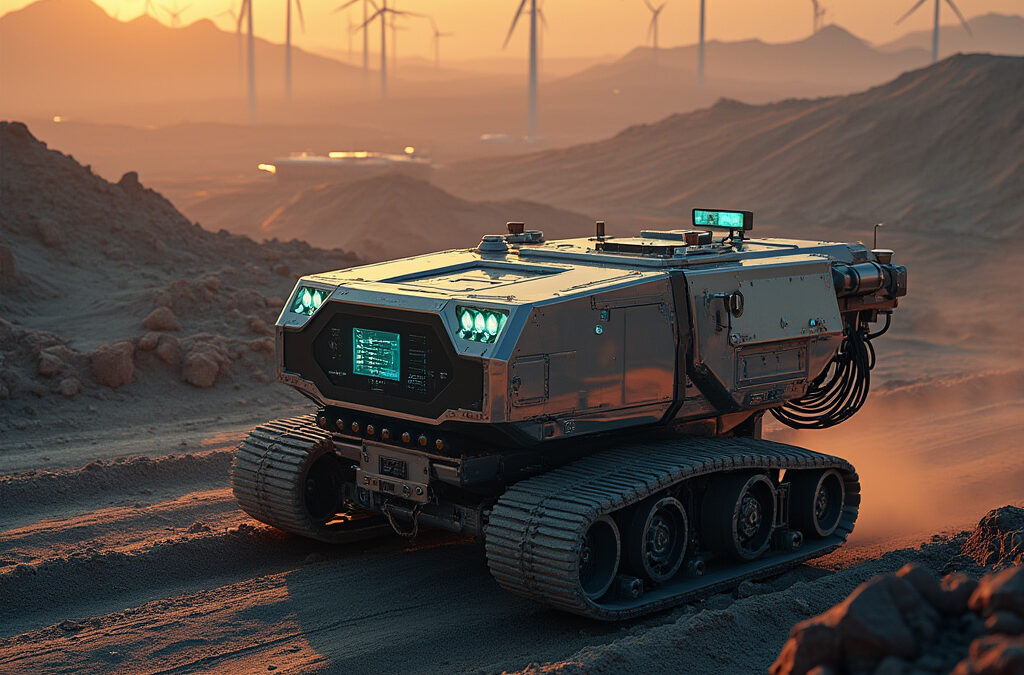
In the Rare Earth Metals Gold Rush, AI Is the New Pickaxe
The rare earth metals industry is in the midst of a modern-day gold rush, where the stakes are high, the opportunities are vast, and the tools of the trade are rapidly evolving. Central to this transformation is artificial intelligence (AI), which has emerged as the indispensable ally for companies and nations vying for control of these critical minerals.
Rare earth elements (REEs)—a group of 17 unique metals including neodymium, praseodymium, and dysprosium—are the backbone of modern technology. They are essential for producing permanent magnets used in electric vehicles (EVs), wind turbines, robotics, and defense systems. As the world accelerates its shift toward electrification and renewable energy, the demand for these elements is projected to surge by 20% by 2025, according to industry projections.
Despite their importance, rare earth metals are notoriously difficult and costly to extract. They are not rare in the Earth’s crust, but they are often found in low concentrations, making their mining and processing both challenging and environmentally intensive. Historically, China has dominated the global supply, producing over 60% of the world’s rare earths and wielding significant geopolitical influence as a result.
However, this landscape is changing. Countries like the United States, Australia, and those in Europe are racing to develop domestic resources and secure new supply chains. The U.S., for instance, is forming strategic alliances with nations like Ukraine, which boasts significant untapped mineral reserves. These efforts are not only about diversifying supply but also about reducing vulnerability to China’s market power.
At the heart of this revolution is AI, which is reshaping every aspect of the rare earth industry. From exploration to extraction, AI-driven technologies are enabling companies to identify promising mineral deposits with unprecedented accuracy. Advanced algorithms are analyzing vast geological datasets to predict where rare earths might be found, reducing the time and cost of exploration.
AI is also playing a critical role in optimizing extraction processes. By modeling complex geological conditions and predicting the behavior of minerals, AI helps miners maximize yields while minimizing environmental impact. This is particularly important as stricter environmental regulations and investor pressure push the industry toward cleaner, more sustainable practices.
Moreover, AI is transforming the way companies approach risk assessment and resource optimization. In a highly competitive and uncertain market, AI tools enable firms to make data-driven decisions, identify promising investment opportunities, and navigate geopolitical complexities with greater confidence.
As the demand for rare earth metals continues to grow, so too does the importance of sustainability. Recycling is emerging as a key strategy for meeting future demand, with companies focusing on recovering rare earths from end-of-life products like EV batteries and wind turbines. This approach not only reduces waste but also enhances supply chain resilience.
In this new era of resource competition, AI is proving to be more than just a tool—it’s a game-changer. By accelerating discovery, improving efficiency, and enabling sustainable practices, AI is helping the rare earth industry meet the challenges of the 21st century. As the world becomes increasingly reliant on these critical minerals, the role of AI will only continue to grow, shaping the future of mining and geopolitics alike.
For more insights, visit Inc.com to explore the full article.
How AI is Revolutionizing Rare Earth Exploration and Extraction
The integration of AI into the rare earth metals industry is not just a trend—it’s a necessity. As demand for these critical minerals continues to soar, driven by the global shift toward electrification and renewable energy, the traditional methods of exploration and extraction are no longer sufficient. AI has emerged as the catalyst for a new era of efficiency, precision, and sustainability in the sector.
One of the most significant advancements AI brings to the table is its ability to analyze vast geological datasets with unprecedented speed and accuracy. By leveraging machine learning algorithms, companies can identify potential rare earth deposits that might have gone undetected using conventional methods. This not only accelerates the exploration process but also reduces the costs associated with searching for these elusive minerals.
AI is also transforming the extraction process. Advanced algorithms can model complex geological conditions, predicting the behavior of minerals and optimizing extraction methods. This level of precision allows miners to maximize yields while minimizing environmental disruption—a critical factor as stricter regulations and investor pressure push the industry toward cleaner practices.
The role of AI extends beyond the technical aspects of mining. It is also a powerful tool for risk assessment and strategic decision-making. In a highly competitive and uncertain market, AI enables companies to evaluate potential investment opportunities, assess geopolitical risks, and navigate the complexities of global supply chains with greater confidence.
As the industry evolves, the focus is increasingly shifting toward sustainability and circularity. Recycling is emerging as a key strategy for meeting future demand, with companies investing in technologies to recover rare earth elements from end-of-life products such as electric vehicle batteries and wind turbines. This approach not only reduces waste but also strengthens supply chain resilience—a vital consideration in an industry where geopolitical tensions often disrupt global markets.
The competitive landscape is further complicated by China’s historical dominance of the rare earth market. However, countries like the United States, Australia, and those in Europe are actively working to diversify their supply chains and reduce dependence on Chinese exports. Strategic alliances, such as the partnership between the U.S. and Ukraine, are being forged to tap into untapped mineral reserves and build domestic refining capacity.
Technological innovation is also playing a pivotal role in this new era of rare earth production. Breakthroughs in separation and recycling technologies are making it possible to extract valuable minerals from lower-grade deposits that were previously considered uneconomical. Additionally, advanced brine extraction methods are being developed to minimize the environmental impact of mining operations.
For more insights, visit Inc.com to explore the full article.
Conclusion
The integration of AI into the rare earth metals industry represents a significant shift in how we explore, extract, and manage these critical minerals. By leveraging machine learning and advanced algorithms, companies are able to identify deposits with greater accuracy, optimize extraction processes, and reduce environmental impact. This technological transformation is not only making the industry more efficient but also paving the way for a more sustainable future.
As demand for rare earth metals continues to grow, driven by the global push toward electrification and renewable energy, the role of AI will become even more crucial. By enabling companies to make data-driven decisions, assess risks, and navigate complex geopolitical landscapes, AI is helping to build a more resilient and diversified supply chain. This is particularly important as countries around the world seek to reduce their dependence on China and develop domestic resources.
The future of the rare earth industry will undoubtedly be shaped by technological innovation. With AI at the forefront, the industry is poised to meet the challenges of the 21st century, from improving recycling and reducing waste to enhancing sustainability and minimizing environmental disruption. As the world becomes increasingly reliant on these critical minerals, the importance of AI will only continue to grow.
Frequently Asked Questions
1. Why are rare earth metals so important?
Rare earth metals are essential for producing permanent magnets used in electric vehicles, wind turbines, robotics, and defense systems. They are critical for modern technology and the global shift toward electrification and renewable energy.
2. How is AI helping in rare earth exploration?
AI is analyzing vast geological datasets with unprecedented speed and accuracy, identifying potential deposits that might have gone undetected using traditional methods. This reduces exploration time and costs.
3. Can AI make rare earth mining more environmentally friendly?
Yes, AI optimizes extraction processes by modeling geological conditions and predicting mineral behavior, allowing miners to maximize yields while minimizing environmental disruption.
4. Is AI making rare earth mining safer?
AI improves safety by enabling more precise extraction methods and reducing the need for invasive mining practices, which can lead to safer working conditions for miners.
5. How does AI impact rare earth recycling?
AI enhances recycling efforts by improving the efficiency of recovering rare earth elements from end-of-life products like EV batteries and wind turbines, reducing waste and strengthening supply chain resilience.