
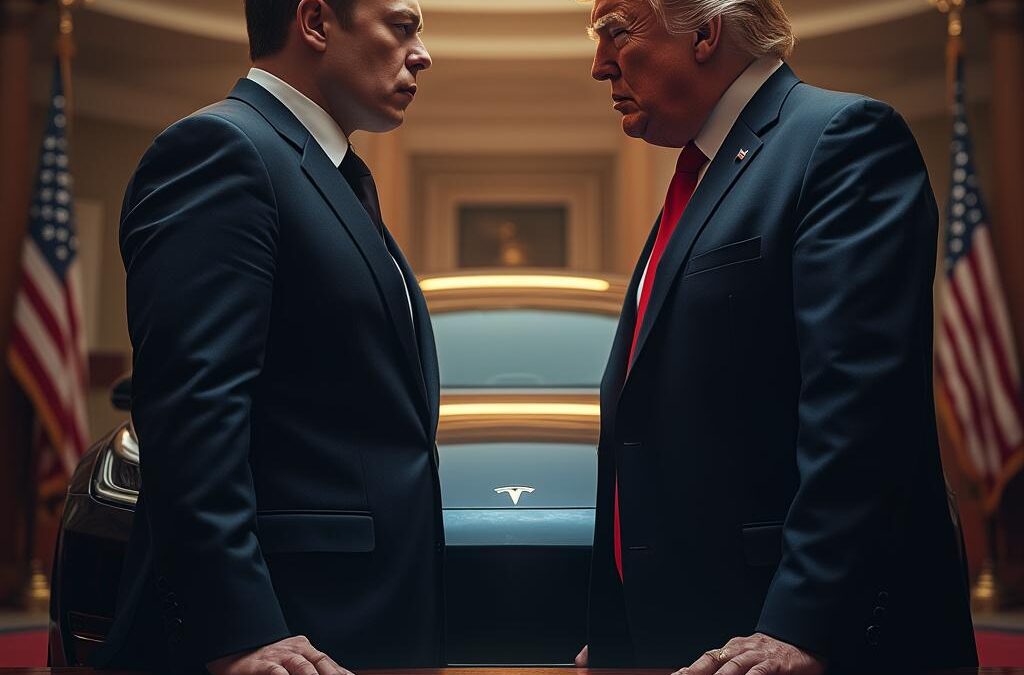
Elon Musk and Trump’s Feud Has Escalated to Vague Deportation Threats
What began as a simmering tension between two of America’s most influential figures has now erupted into a full-blown public feud. Elon Musk, the billionaire CEO of Tesla and X (formerly Twitter), and former President Donald Trump, once political allies, are locked in an escalating conflict that has drawn national attention.
Their relationship, once defined by mutual support and shared political goals, has unraveled over disagreements on policy, ideology, and Musk’s growing political ambitions. The feud reached a new low when vague deportation threats were exchanged, adding a personal and unpredictable dimension to their clash.
The roots of the conflict lie in Musk’s recent announcement to create the America Party, a new political entity aimed at challenging the traditional two-party system. Musk, a vocal critic of government spending and what he describes as a lack of true democracy in the U.S., has positioned the party as a response to what he sees as excessive fiscal irresponsibility in Washington.
The catalyst for the feud, however, was President Trump’s “One Big Beautiful Bill Act,” a sweeping piece of legislation that includes significant tax cuts and increased government spending. Musk has been outspoken in his criticism of the bill, arguing that it will add trillions to the national debt and exacerbate what he calls “waste & graft” in government.
“When it comes to bankrupting our country with waste & graft, we live in a one-party system, not a democracy,” Musk wrote on X. “Today, the America Party is formed to give you back your freedom.” The statement marked a clear break from Trump, who has long championed fiscal policies that Musk now condemns.
Trump responded swiftly and sharply, dismissing Musk’s third-party idea as “ridiculous” and arguing that third parties have never succeeded in the U.S. political system. He suggested Musk’s motivation stems from the bill’s elimination of tax breaks for electric vehicles—a move that could cost Tesla billions—and reduced green energy incentives. While Musk’s criticisms have focused on the overall cost of the legislation, Trump has framed the feud as a personal vendetta driven by Musk’s business interests.
The feud marks a stark reversal in their relationship. Just a few years ago, Musk was one of Trump’s most prominent supporters, spending nearly $300 million to back Trump and other Republicans in the last election cycle. He was even rewarded with a prominent advisory role overseeing the Department of Government Efficiency, where he led mass federal employee firings and installed loyalists in various government positions under Trump’s direction.
Despite his push for the America Party, Musk has not ruled out continued involvement in Republican politics. He has suggested backing primary challengers against GOP lawmakers who supported Trump’s bill and has pledged his support to Rep. Thomas Massie, a Republican who voted against the legislation and now faces a Trump-backed primary challenger.
Musk’s broader strategy may also involve America PAC, a super PAC through which he can wield significant influence by donating unlimited sums—though the group must remain officially independent from any candidate or party. Musk has stated the “party’s focus for the next 12 months is on the House and the Senate,” leaving open the possibility of supporting a presidential candidate in 2028 but indicating his immediate priority is to shift Congressional power.
In summary, the public fallout between Musk and Trump highlights deepening fissures within conservative politics, with Musk positioning himself as both a critic of Trump’s fiscal policies and a potential disruptor through the formation of a new political movement. Trump, meanwhile, maintains that the U.S. system is not conducive to third parties and has sought to downplay Musk’s influence as motivated by personal business interests. The feud underscores the volatility and complexity of contemporary American political alliances.
Source: INC
Elon Musk and Trump’s Feud Has Escalated to Vague Deportation Threats
What began as a simmering tension between two of America’s most influential figures has now erupted into a full-blown public feud. Elon Musk, the billionaire CEO of Tesla and X (formerly Twitter), and former President Donald Trump, once political allies, are locked in an escalating conflict that has drawn national attention.
Their relationship, once defined by mutual support and shared political goals, has unraveled over disagreements on policy, ideology, and Musk’s growing political ambitions. The feud reached a new low when vague deportation threats were exchanged, adding a personal and unpredictable dimension to their clash.
The roots of the conflict lie in Musk’s recent announcement to create the America Party, a new political entity aimed at challenging the traditional two-party system. Musk, a vocal critic of government spending and what he describes as a lack of true democracy in the U.S., has positioned the party as a response to what he sees as excessive fiscal irresponsibility in Washington.
The catalyst for the feud, however, was President Trump’s “One Big Beautiful Bill Act,” a sweeping piece of legislation that includes significant tax cuts and increased government spending. Musk has been outspoken in his criticism of the bill, arguing that it will add trillions to the national debt and exacerbate what he calls “waste & graft” in government.
“When it comes to bankrupting our country with waste & graft, we live in a one-party system, not a democracy,” Musk wrote on X. “Today, the America Party is formed to give you back your freedom.” The statement marked a clear break from Trump, who has long championed fiscal policies that Musk now condemns.
Trump responded swiftly and sharply, dismissing Musk’s third-party idea as “ridiculous” and arguing that third parties have never succeeded in the U.S. political system. He suggested Musk’s motivation stems from the bill’s elimination of tax breaks for electric vehicles—a move that could cost Tesla billions—and reduced green energy incentives. While Musk’s criticisms have focused on the overall cost of the legislation, Trump has framed the feud as a personal vendetta driven by Musk’s business interests.
The feud marks a stark reversal in their relationship. Just a few years ago, Musk was one of Trump’s most prominent supporters, spending nearly $300 million to back Trump and other Republicans in the last election cycle. He was even rewarded with a prominent advisory role overseeing the Department of Government Efficiency, where he led mass federal employee firings and installed loyalists in various government positions under Trump’s direction.
Despite his push for the America Party, Musk has not ruled out continued involvement in Republican politics. He has suggested backing primary challengers against GOP lawmakers who supported Trump’s bill and has pledged his support to Rep. Thomas Massie, a Republican who voted against the legislation and now faces a Trump-backed primary challenger.
Musk’s broader strategy may also involve America PAC, a super PAC through which he can wield significant influence by donating unlimited sums—though the group must remain officially independent from any candidate or party. Musk has stated the “party’s focus for the next 12 months is on the House and the Senate,” leaving open the possibility of supporting a presidential candidate in 2028 but indicating his immediate priority is to shift Congressional power.
In summary, the public fallout between Musk and Trump highlights deepening fissures within conservative politics, with Musk positioning himself as both a critic of Trump’s fiscal policies and a potential disruptor through the formation of a new political movement. Trump, meanwhile, maintains that the U.S. system is not conducive to third parties and has sought to downplay Musk’s influence as motivated by personal business interests. The feud underscores the volatility and complexity of contemporary American political alliances.
Source: INC
html
Conclusion
The escalating feud between Elon Musk and Donald Trump reflects deeper tensions within American politics, particularly among conservative voices. Musk’s formation of the America Party and his criticism of Trump’s fiscal policies highlight his growing political ambitions and his desire to challenge the status quo. On the other hand, Trump’s dismissal of third-party movements and his focus on Musk’s potential business motivations underscore his belief in the traditional two-party system. As this conflict continues to unfold, it raises important questions about the future of political alliances, the role of third parties, and the influence of high-profile figures in shaping U.S. politics.
Frequently Asked Questions
What caused the feud between Elon Musk and Donald Trump?
The feud escalated primarily due to disagreements over policy and ideology, particularly Musk’s criticism of Trump’s “One Big Beautiful Bill Act” and his announcement to form the America Party. Musk opposes the bill’s potential to increase the national debt, while Trump dismisses the third-party idea as “ridiculous.”
What is the America Party, and what are its goals?
The America Party is a new political entity announced by Elon Musk, aimed at challenging the traditional two-party system. Its primary goals include addressing government spending, reducing fiscal irresponsibility, and advocating for what Musk describes as “true democracy” in the U.S.
How does the America PAC factor into Musk’s political strategy?
The America PAC is a super PAC that allows Musk to donate unlimited sums to influence political outcomes. While it must remain independent of any candidate or party, it provides Musk with a tool to support candidates who align with his goals, particularly in shifting Congressional power in the near term.
Is there a chance Musk and Trump could reconcile?
While neither side has ruled out future collaboration, the current feud suggests a significant breakdown in their relationship. Musk has not entirely closed the door on involvement in Republican politics, but his focus on the America Party and his criticism of Trump’s policies indicate a divergence in their paths.
What does this feud mean for U.S. politics?
The feud highlights the growing divisions within conservative politics and the potential for new political movements to emerge. It also underscores the challenges of third-party success in the U.S. system, as well as the influence of high-profile figures in shaping political discourse and alliances.