
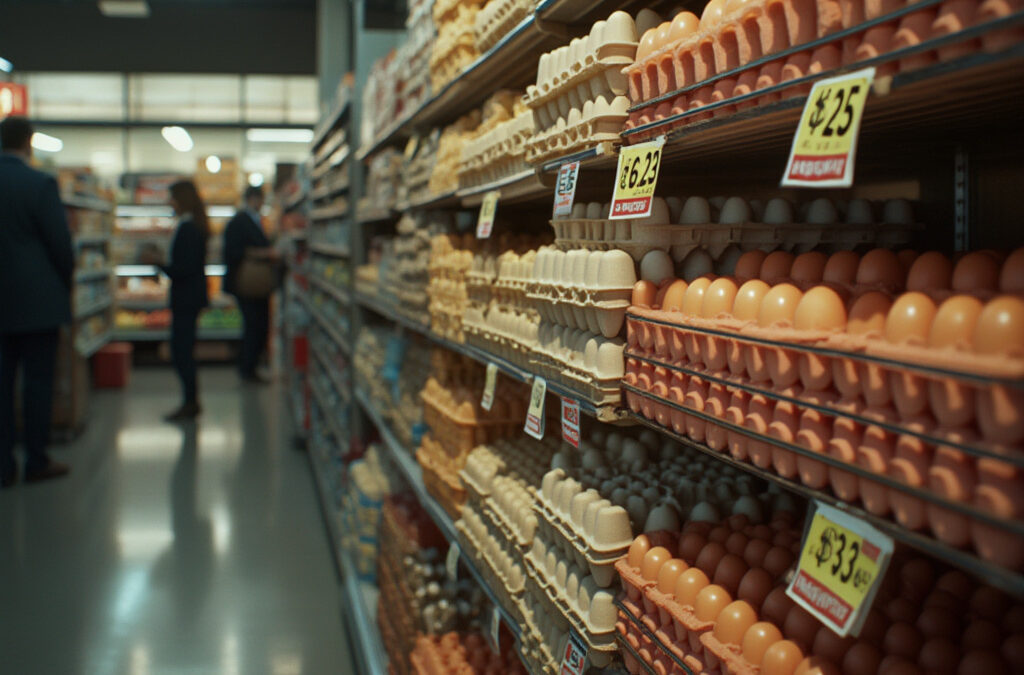
Egg Prices Reach a Record High, Despite Trump’s Predictions
In March 2025, egg prices in the United States hit an unprecedented milestone, reaching a record high of $6.23 per dozen for large eggs, according to the Consumer Price Index. This surge has left consumers and businesses scrambling to cope with the financial strain, despite earlier predictions of relief from industry leaders and government officials.
The Current Crisis
The average cost of eggs has skyrocketed, with prices varying significantly across regions. In California, cage-free eggs were selling for as much as $12 per dozen, while other areas reported prices ranging from $5 to $10. These elevated prices persist despite recent declines in wholesale egg costs, as retail pricing systems often lag behind wholesale market changes.
A Perfect Storm of Challenges
The root of the crisis lies in a combination of unforeseen events and economic pressures. A devastating outbreak of highly pathogenic avian influenza (HPAI), which began in 2022, has had a lasting impact on the nation’s egg supply. The virus has led to the culling of over 168 million birds, including egg-laying hens, to curb its spread.
By March 2025, the number of egg-laying hens had dropped to 285 million, down from a pre-outbreak average of over 315 million. Farmers are facing prolonged recovery times, as new flocks require six months to mature and begin laying eggs. This ongoing disruption has created a significant gap between supply and demand.
Economic Pressures Intensify the Crisis
Rising production costs have further exacerbated the situation. The expenses associated with feed, labor, fuel, and replacing egg-laying hens have all increased, driving up retail prices. According to the U.S. Department of Agriculture, the costs paid by livestock farms have surged by 36% since January 2020.
While many farmers struggle to stay afloat, major egg producers like Cal-Maine Foods have reported record profits. This has sparked concerns about potential price gouging, prompting an investigation by the Department of Justice. Critics argue that these profits, amid a national crisis, raise questions about fairness in the market.
Seasonal Demand Adds to the Pressure
The lead-up to holidays like Easter and Passover, traditionally periods of high egg consumption, has further strained the market. This seasonal spike in demand has collided with the ongoing supply shortages caused by the bird flu outbreak and production challenges, pushing prices even higher.
A Long and Uncertain Road to Recovery
While recent declines in wholesale egg prices offer a glimmer of hope, experts warn that retail prices may remain elevated for some time. Retailers often take time to reflect wholesale changes, and many are still recovering losses incurred during the pandemic and inflationary spikes.
President Donald Trump has introduced measures to support egg farmers and increase imports, but these efforts are seen as long-term solutions rather than immediate fixes. Critics argue that the administration’s response has not done enough to alleviate the burden on consumers, many of whom are struggling to afford basic staples like eggs.
As the nation grapples with this crisis, one thing is clear: the record-breaking egg prices of 2025 are the result of a complex interplay of factors, from the persistent avian influenza outbreak to economic inflation and seasonal demand spikes. While there are early signs of relief, the challenges of rebuilding egg supplies and addressing economic pressures suggest that high retail prices may persist in the near term.
For now, consumers and businesses will have to navigate this uncertain landscape, hoping that the combination of government intervention, industry adaptation, and natural market corrections will eventually bring egg prices back down to earth.
Egg Prices Continue to Soar Amid Ongoing Challenges
The Ongoing Impact of Avian Influenza
The highly pathogenic avian influenza (HPAI) outbreak, which began in 2022, has persisted longer than expected, unlike the 2014-2015 bird flu epidemic that subsided after about a year. The current strain has continued to circulate among wild birds and backyard flocks, creating more opportunities for the virus to spread. This ongoing nature of the outbreak has prolonged the recovery process for farmers, as new flocks require six months to mature and begin laying eggs. By March 2025, the number of egg-laying hens had fallen to 285 million, down from a pre-outbreak average of over 315 million.
Economic Factors and Price Gouging Concerns
Inflation has played a significant role in driving up egg prices. The costs associated with egg production, such as feed, labor, fuel, and replacing egg-laying hens, have all increased. According to the U.S. Department of Agriculture, the prices paid by livestock farms increased by 36% from January 2020 to January 2025. These rising production costs have been passed on to consumers, further inflating retail prices.
Major egg producers like Cal-Maine Foods have reported record profits during this crisis, raising suspicions about potential price gouging. The Department of Justice has launched an investigation into these allegations, as critics argue that such profits, amid a national crisis, raise questions about fairness in the market.
Seasonal Demand and Market Strain
Seasonal factors have also amplified the price surge. The lead-up to holidays like Easter and Passover, which are traditionally associated with high egg consumption, has heightened demand. This seasonal increase has compounded the supply issues caused by the bird flu and production challenges, pushing prices even higher.
Government Response and Long-term Solutions
President Donald Trump has introduced measures to address the crisis, including efforts to strengthen the resilience of egg farmers and boost imports. However, these initiatives are viewed as long-term solutions rather than immediate fixes. Critics argue that the administration’s response has not substantially alleviated the strain on consumers, many of whom are struggling to afford basic staples like eggs.
Long-term Outlook and Recovery
While recent declines in wholesale egg prices suggest potential relief, experts caution that there may be a lag before these changes are reflected in retail prices. Retailers often take time to recuperate losses, and many are still recovering from the financial impacts of the pandemic and inflationary spikes. Additionally, egg supply is expected to improve as affected farms rebuild their flocks, but this will take time.
The record-breaking egg prices in 2025 are the result of a complex interplay of factors, including the persistent avian influenza outbreak, economic inflation, and seasonal demand spikes. While there are early signs of relief, the challenges of rebuilding egg supplies and addressing economic pressures suggest that high retail prices may persist in the near term, particularly until after seasonal demand subsides.
For now, consumers and businesses will have to navigate this uncertain landscape, hoping that the combination of government intervention, industry adaptation, and natural market corrections will eventually bring egg prices back down to earth.
html
[429] tokens Rate limit reached for model in organization service tier on tokens per minute (TPM): Limit 6000, Used 4117, Requested 2049. Please try again in 1.652999999s. Need more tokens? Upgrade to Dev Tier today at https://console.groq.com/settings/billing