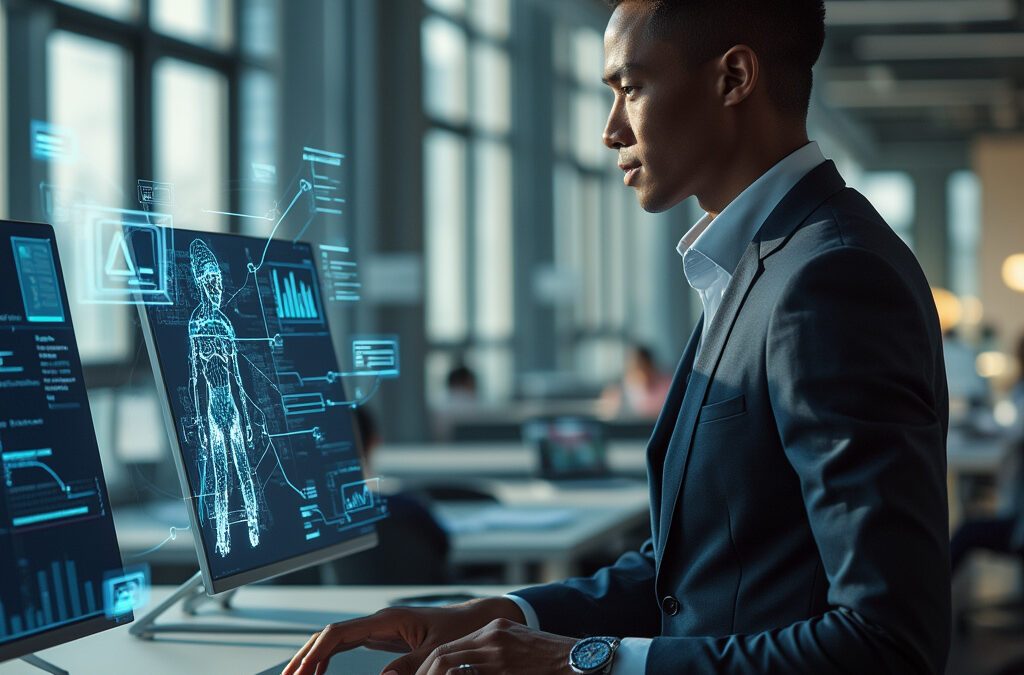
The modern workplace is undergoing a profound transformation, as AI agents increasingly take on roles once exclusively held by humans. These advanced systems are not just tools; they’re autonomous collaborators, capable of handling complex tasks, making decisions, and even learning on the job.
AI agents are reshaping industries by automating repetitive tasks, enhancing employee training, and boosting productivity. Unlike traditional AI tools, these agents operate with a level of autonomy, functioning as digital deputies that free humans to focus on strategic and creative work.
From scheduling meetings to drafting documents, AI agents are streamlining administrative tasks. They also handle routine communications, reducing the burden on human employees. This shift is enabling organizations to operate more efficiently, with AI agents working alongside humans to drive innovation.
While these advancements promise significant benefits, they also raise concerns among human workers. Job security worries and the need for upskilling are prompting employees to rethink their roles in an AI-driven world. As AI becomes more integral to workplace operations, the ability to collaborate with these digital colleagues is becoming a critical skill.
Organizations are adapting to this new reality by balancing human and digital roles. With 85% of companies already implementing AI in some form, the integration of AI agents is no longer a trend—it’s a necessity. The future of work will depend on how well humans and AI can work together to achieve common goals.
AI agents are also revolutionizing the way organizations approach learning and development. By assessing employees’ strengths and weaknesses, these agents can create personalized learning paths tailored to individual needs. This not only enhances skill development but also ensures that employees receive real-time feedback, allowing for continuous improvement. Additionally, AI agents can guide employees through unfamiliar software or complex procedures, making on-the-job learning more accessible and efficient.
In the realm of talent management, AI agents are driving a significant shift toward a hybrid workforce. As organizations increasingly adopt these digital tools, they must strategically balance human and AI roles to maintain a cohesive work environment. This integration is part of a broader trend, with approximately 85% of organizations already leveraging AI in their operations. Many companies are also using AI agents for workforce planning, ensuring they are well-prepared to meet future challenges.
The future of work is expected to see even greater productivity gains as AI agents take on routine tasks, enabling humans to focus on strategic and creative efforts. These agents will also collaborate with humans on complex projects, fostering innovation and driving business growth. Moreover, AI agents will facilitate continuous operations by handling tasks outside traditional working hours, ensuring that businesses can maintain efficiency around the clock.
However, the integration of AI agents also underscores the importance of adaptability for organizations. To remain competitive in a rapidly evolving market, businesses must be willing to embrace change and invest in the necessary tools and training. This includes fostering a culture where humans and AI can collaborate effectively, ensuring that the full potential of these technologies is realized.
While some employees may be concerned about job security, the rise of AI agents is creating new opportunities for growth. As these technologies handle routine tasks, humans can focus on developing skills that complement AI, such as conflict resolution, adaptability, and innovative thinking. This shift is not just about coexisting with AI but about leveraging it to enhance human capabilities and drive success in the workplace.
Conclusion
The integration of AI agents into the modern workplace represents a significant shift in how organizations operate. These advanced systems are not merely tools but autonomous collaborators that enhance productivity, streamline tasks, and foster innovation. While concerns about job security and the need for upskilling are valid, the collaboration between humans and AI agents is paving the way for a more efficient and adaptive work environment. As businesses continue to embrace this transformation, the future of work will increasingly rely on the synergy between human creativity and AI-driven efficiency.
FAQ
- What are AI agents and how are they transforming the workplace?
- AI agents are advanced systems that function as autonomous collaborators, handling complex tasks, learning on the job, and freeing humans to focus on strategic work. They are reshaping industries by automating repetitive tasks, enhancing training, and boosting productivity.
- How do AI agents differ from traditional AI tools?
- AI agents operate with a level of autonomy, functioning as digital deputies that can make decisions and collaborate with humans, unlike traditional AI tools that typically perform predefined tasks without autonomy.
- Will AI agents replace human workers?
- While AI agents automate routine tasks, they also create new opportunities for human workers to focus on strategic and creative roles. The shift is about collaboration rather than replacement, with humans developing skills that complement AI capabilities.
- What skills will be important for humans to work alongside AI agents?
- Skills such as conflict resolution, adaptability, innovative thinking, and the ability to collaborate with AI will be crucial for humans to thrive in an AI-driven workplace.
- How are organizations adapting to the integration of AI agents?
- Organizations are balancing human and digital roles, with 85% of companies already implementing AI in some form. They are also fostering a culture that supports effective collaboration between humans and AI agents.