
Humanoid Robots: A Glimpse into the Future, but Still Chasing AI
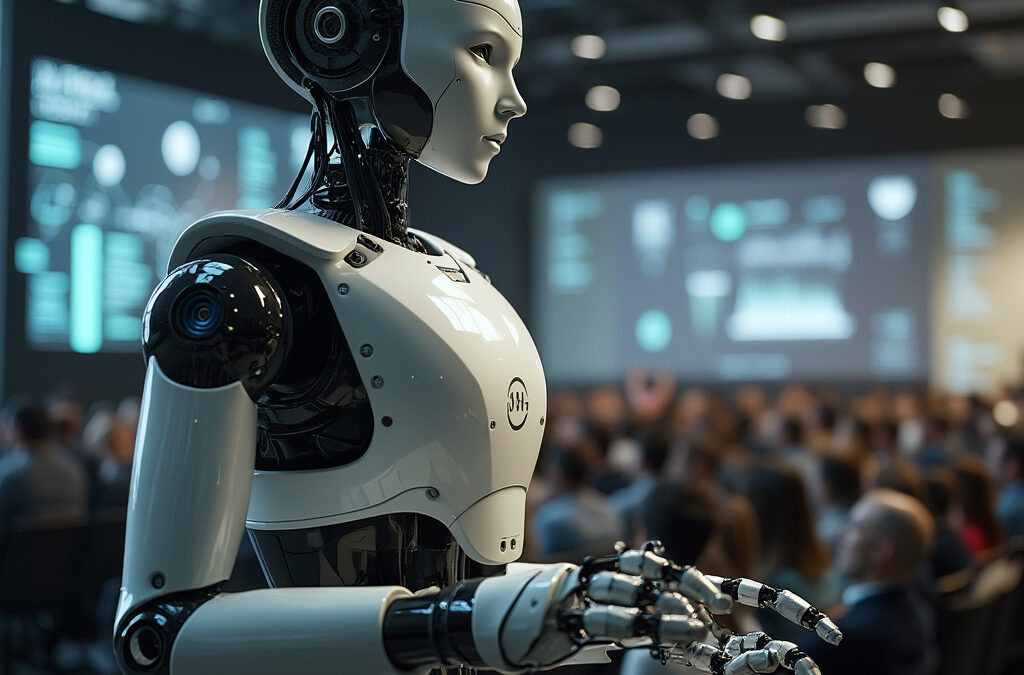
Humanoid robots are inching closer to science fiction ideals, but their journey to match the sophistication of artificial intelligence (AI) is far from over. Recent demonstrations at the International Conference on Robotics and Automation (ICRA) in Yokohama, Japan, showcased the latest advancements in humanoid robotics, blending impressive physical feats with lingering limitations.
At ICRA, over a dozen cutting-edge humanoids, including Boston Dynamics’ Atlas, Unitree’s H1, and Sanctuary AI’s Phoenix, took center stage. These robots demonstrated walking, grasping, conversing, and even manipulating tools, drawing both admiration and scrutiny from robotics experts. A standout moment came when Agility Robotics’ Digit robot picked up a bag and navigated a corridor, earning sustained applause. Yet, these achievements were the result of extensive behind-the-scenes effort, and the robots often stumbled when faced with uncontrolled environments.
The gap between humanoid robots and AI software like OpenAI’s ChatGPT or Google’s Gemini is stark. While AI systems can generate language, images, and audio in milliseconds, humanoid robots struggle with basic tasks like fine-motor skills and adaptability. Despite decades of innovation—highlighted by pioneers like Honda’s Asimo—modern humanoids like Tesla’s Optimus and Figure AI’s Figure 01 are only beginning to venture out of labs, with tightly scripted roles in retail, warehouses, and hospitality.
Efforts to bridge this gap are underway. Researchers are integrating generative AI into robots to enhance their reasoning and conversational abilities. Some prototypes now interpret commands and plan actions in real time, offering a glimpse of what the future might hold. Industry leaders envision a future where humanoids seamlessly work alongside humans, but experts warn that this vision is still years, if not decades, away.
Challenges like battery life, mechanical fragility, and the complexity of human environments remain significant hurdles. While the market potential for humanoid robots is vast, with applications spanning logistics, elder care, and customer service, the current state of the technology is a reminder that the road to true autonomy is long and winding.
Integration with AI and Future Outlook
Robotics researchers are increasingly integrating cutting-edge generative AI methods into their robots in hopes of giving them better reasoning and conversation skills. Some prototypes now use AI models to converse with humans, interpret commands, and plan basic actions in real time. Industry leaders expect that merging advanced physical platforms with next-generation AI will eventually enable truly useful and adaptable humanoids capable of operating alongside people both at home and in workplaces.
However, experts caution that the path to widespread, autonomous, and reliably useful humanoid robots will likely take years—if not decades—of additional technical advances. Issues such as battery limitations, mechanical fragility, and the complexity of human environments pose ongoing challenges. Industry projections envision a future where humanoid robots become an everyday presence, but the current state of the art is still far from that vision.
Market Potential and Economic Impact
Despite current constraints, analysts predict a booming market for humanoid robots. Investment is growing rapidly; major firms and startups are racing to secure early-mover advantages. Prototypes are now priced in the tens of thousands of dollars, but projected mass production and economies of scale, paired with breakthroughs in AI and hardware, could bring costs down and expand deployment in fields such as logistics, elder care, manufacturing, and customer service.
Conclusion
Humanoid robots have made remarkable strides, captivating audiences with their physical abilities, yet they still fall short of the sophistication achieved by advanced AI systems. While robots like Atlas and Digit showcase impressive feats, challenges such as adaptability and mechanical limitations persist. The integration of generative AI offers promising prospects for enhanced capabilities, but significant technical hurdles remain. Despite these challenges, the market potential for humanoid robots is vast, with applications across logistics, healthcare, and customer service. As the technology evolves, the vision of humanoid robots seamlessly integrating into daily life inches closer, though it remains a future aspiration.
Frequently Asked Questions
What are some examples of advanced humanoid robots?
Examples include Boston Dynamics’ Atlas, Unitree’s H1, and Agility Robotics’ Digit, which have demonstrated impressive physical tasks and adaptability.
How do humanoid robots differ from AI systems like ChatGPT?
Humanoid robots excel in physical tasks but lag in cognitive functions, whereas AI systems like ChatGPT excel in processing information and generating content.
What challenges do humanoid robots currently face?
Key challenges include limited battery life, mechanical fragility, and difficulty adapting to unstructured environments.
What is the future outlook for humanoid robots?
Experts predict gradual advancements with potential widespread use in various industries, though this may take years to decades.
How much do humanoid robots cost?
Current prototypes are priced in the tens of thousands, but costs are expected to decrease with mass production and technological advancements.
What applications are humanoid robots suited for?
They are being explored for use in logistics, elder care, manufacturing, and customer service, leveraging their physical and interactive capabilities.
When might humanoid robots become common in everyday life?
Industry leaders envision a future where humanoid robots are ubiquitous, but this is likely years or decades away.