
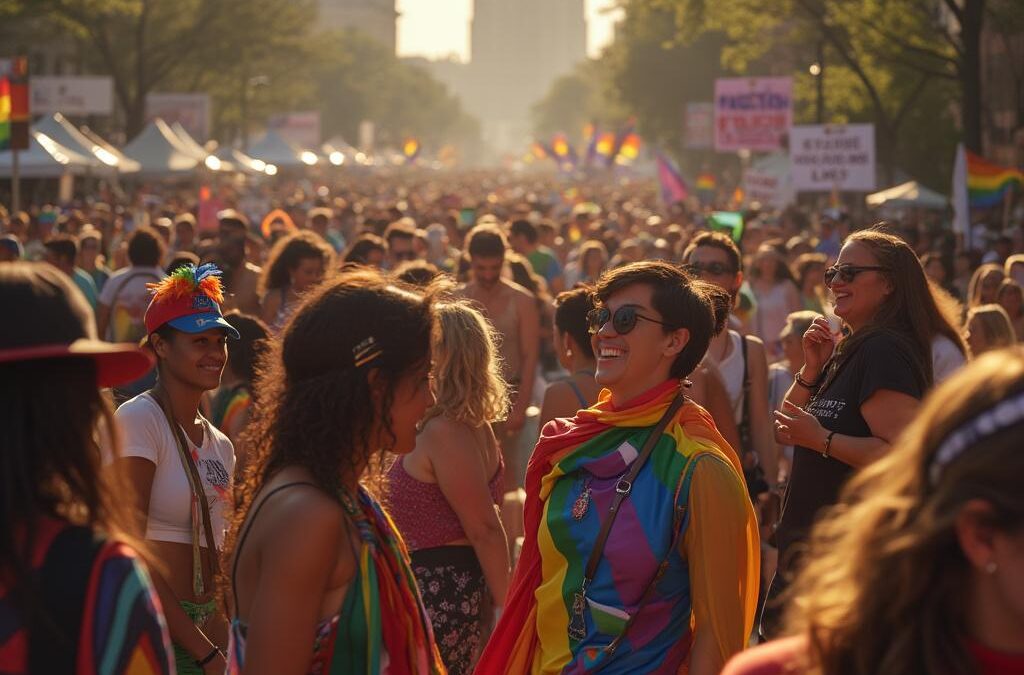
Why Philadelphia Pride Organizers Dumped Its Big Corporate Sponsors
Philadelphia’s 2025 Pride celebration made headlines for a surprising reason: the absence of major corporate sponsors. While the event still secured over three dozen sponsors, including NRG, Penn Medicine, and the Philadelphia Union, several big names from 2024 were notably missing. Companies like Target, Wawa, AARP, and Burlington, which had previously supported the event, were no longer part of the sponsorship lineup.
The most striking example was Target, a company that had been a prominent supporter of Pride events in the past. However, in 2025, Philly Pride 365 reportedly rejected Target’s sponsorship offer. A spokesperson for Target confirmed that the company was informed they would not be entering into sponsorship agreements for the year. This decision came amid growing controversy surrounding Target’s rollback of diversity, equity, and inclusion (DEI) initiatives and its decision to remove Pride merchandise from its stores in recent years.
Philadelphia’s situation is not an isolated incident. Across the U.S., Pride organizations and corporations are reevaluating their relationships. Many companies have pulled their support for Pride events, reflecting a broader national trend of scaling back DEI efforts. In New York City, major companies like Mastercard, Citi, Pepsi, Nissan, and PwC withdrew their sponsorship of NYC Pride. Similarly, in Washington, D.C., firms like Booz Allen Hamilton and Deloitte pulled out of WorldPride. In Minneapolis, Twin Cities Pride explicitly rejected Target’s sponsorship, citing the company’s DEI rollbacks as the reason.
San Francisco Pride offers another example of this shift. The event reported a $300,000 loss due to corporate withdrawals, though organizers hope to reduce this gap by securing increased donations from other sponsors. Interestingly, some companies, like Benefit Cosmetics and La Crema, which initially dropped their sponsorships, have since returned as partners.
Beyond the sponsorship changes, Philadelphia’s Pride organization has undergone significant structural changes. Galaei, the nonprofit that had served as the event’s fiscal sponsor for several years, stepped down from this role in 2025. The organization explained that its support was always intended to be temporary and that it is now refocusing on directly serving QTBIPOC (Queer and Trans Black, Indigenous, and People of Color) individuals. The Urban Affairs Coalition has since taken over as the new fiscal sponsor, managing Philly Pride 365.
Traditionally, Philadelphia’s Pride weekend has been funded through a mix of sponsors, vendors, grants, and donations. As Pride Month continues to evolve from its origins commemorating the 1969 Stonewall riots, the relationship between corporate America and LGBTQ+ celebrations appears to be at a crossroads. Both sides are reassessing their approaches to engagement and support, signaling a potential shift in how Pride events are funded and organized in the future.
The Evolving Landscape of Pride Funding and Community Response
The shift in corporate sponsorship dynamics has brought significant challenges for Pride organizers, particularly in terms of funding. Philadelphia Pride 365, for instance, has traditionally relied on a mix of sponsors, vendors, grants, and donations to support its annual celebration. While the event secured over three dozen sponsors in 2025, the absence of major corporate backers like Target, Wawa, AARP, and Burlington has forced organizers to explore alternative funding strategies.
Organizers have emphasized the importance of community support to fill the financial gaps left by corporate withdrawals. Philly Pride 365 has called on individual donors and smaller, local businesses to step up their contributions. This approach reflects a broader trend across the U.S., where Pride events are increasingly relying on grassroots funding to sustain their operations. In San Francisco, for example, organizers managed to reduce their financial shortfall by securing increased pledges from remaining sponsors, such as Benefit Cosmetics and La Crema, which rejoined as partners after initially withdrawing their support.
The decision by Galaei to step down as the fiscal sponsor of Philadelphia Pride has also prompted a reevaluation of the event’s organizational structure. Galaei, which had served in this role for several years, explained that its involvement was always intended to be temporary. The nonprofit has now shifted its focus to directly serving QTBIPOC (Queer and Trans Black, Indigenous, and People of Color) individuals, a move that underscores the evolving priorities of LGBTQ+ advocacy groups. The Urban Affairs Coalition, which has taken over as the new fiscal sponsor, will play a critical role in managing resources and ensuring the event’s continued success.
These changes have sparked a wider conversation about the role of corporate sponsorships in Pride celebrations. Critics argue that some companies have used Pride as a marketing tool without genuinely supporting LGBTQ+ causes, a practice often referred to as “rainbow washing.” The rejection of Target’s sponsorship offer by Philly Pride 365 has been cited as a prime example of this growing scrutiny. Target’s recent decisions to scale back DEI initiatives and remove Pride merchandise from its stores have drawn criticism from LGBTQ+ advocates, who view the company’s actions as inconsistent with the values of inclusivity and equality that Pride represents.
Nationally, the trend of corporations pulling back from Pride sponsorships has raised questions about the long-term sustainability of these events. While some companies, like those in San Francisco, have reconsidered their decisions and returned as sponsors, others have permanently withdrawn their support. This unpredictability has prompted Pride organizers to diversify their funding streams and place greater emphasis on community-driven initiatives. For example, many events are now prioritizing partnerships with local businesses and leveraging social media campaigns to engage individual donors and volunteers.
As Pride Month continues to evolve, the relationship between corporate America and LGBTQ+ celebrations remains uncertain. The decisions made by Philadelphia Pride 365 and other organizations to distance themselves from certain corporate sponsors reflect a broader shift toward greater accountability and alignment with LGBTQ+ values. Whether this approach will lead to a more sustainable and equitable model for funding Pride events remains to be seen, but one thing is clear: the future of Pride celebrations will depend on a delicate balance between corporate support and community-driven initiatives.
Conclusion
The decision by Philadelphia Pride organizers to distance themselves from major corporate sponsors reflects a broader national shift in how Pride events are funded and organized. As corporations reassess their commitments to DEI initiatives, Pride organizations are increasingly prioritizing authenticity and alignment with LGBTQ+ values. This evolution underscores a growing movement toward accountability, where companies are expected to demonstrate tangible support for LGBTQ+ communities beyond surface-level marketing efforts.
The transition to grassroots funding and community-driven initiatives highlights the resilience and adaptability of Pride organizers. While the financial challenges are significant, the renewed focus on local businesses, individual donors, and transparent partnerships offers a promising path forward. As Pride Month continues to evolve, the balance between corporate support and community engagement will be crucial in shaping the future of these celebrations.
Frequently Asked Questions (FAQ)
Why did Philadelphia Pride organizers reject corporate sponsors like Target?
Philadelphia Pride organizers rejected corporate sponsors like Target due to concerns over “rainbow washing,” where companies appear to support LGBTQ+ causes without genuinely advancing DEI initiatives. Target’s recent rollback of diversity efforts and removal of Pride merchandise from stores were key factors in this decision.
How is Philadelphia Pride adapting to the loss of corporate sponsors?
Philadelphia Pride is adapting by emphasizing community support, including individual donations, local businesses, and grassroots funding. Organizers are also exploring alternative sponsorship opportunities and leveraging social media campaigns to engage donors and volunteers.
What impact has the loss of corporate sponsors had on Pride events nationally?
Nationally, the loss of corporate sponsors has led to financial challenges for Pride events, with some organizations reporting significant shortfalls. However, many have successfully reduced these gaps by securing increased support from remaining sponsors and community-driven initiatives.
What does the future of Pride funding look like?
The future of Pride funding is likely to involve a mix of corporate support and community-driven initiatives. Organizers are prioritizing transparency, accountability, and alignment with LGBTQ+ values, ensuring that sponsors demonstrate genuine commitment to DEI efforts.