
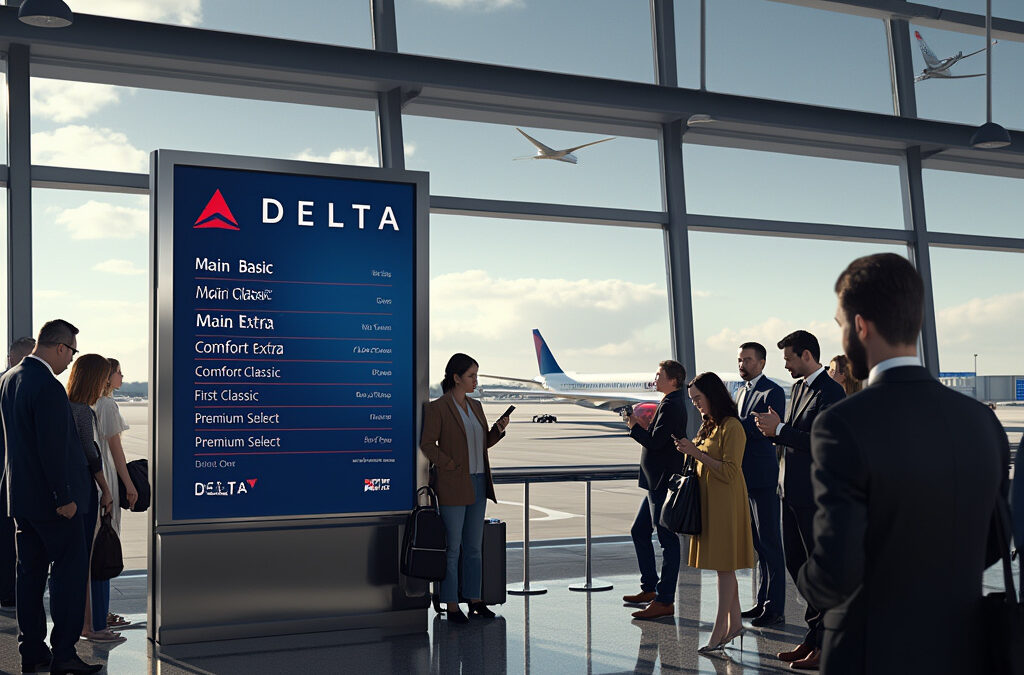
Delta Air Lines has unveiled a sweeping rebrand of its ticket tiers, marking the most significant overhaul of its fare structure in years. Set to take effect for flights departing October 1, 2025, and beyond, the changes aim to streamline choices for customers while introducing new opportunities for upselling—particularly targeting the airline’s most loyal travelers.
The rebranding introduces five primary ticket categories: Delta Main, Delta Comfort, Delta First, Delta Premium Select, and Delta One. Notably, Delta Main now encompasses three sub-tiers: Main Basic, Main Classic, and Main Extra, effectively absorbing the former basic economy fare into this category.
Under the new system, Delta Main Basic replaces traditional basic economy, offering the most restrictive terms, including assigned seating at check-in, low boarding priority, no mileage earnings, and limited refund options. Meanwhile, Main Classic and Main Extra provide escalating benefits, with Main Extra offering full refundability and enhanced perks.
Delta Comfort, formerly Comfort+, retains its extra-legroom economy seating but now includes Classic and Extra sub-tiers. Similarly, Delta First, which replaces domestic First Class, adopts the same sub-tiered approach. Delta Premium Select and Delta One remain unchanged in name but also feature Classic and Extra versions, allowing for more nuanced upselling even among premium passengers.
According to Delta, the rebranding is designed to enhance clarity and choice for travelers, making it easier to compare fare inclusions. Chief Digital Officer Eric Phillips emphasized that “clarity and choice are paramount” in responding to customer feedback. The move also aligns the airline’s branding with a consistent global identity.
However, analysts suggest the change is more strategic than cosmetic. By layering sub-tiers within each class, Delta creates opportunities to upsell to loyal customers, particularly business travelers and frequent flyers. With demand for premium seats outpacing economy options, the airline is well-positioned to maximize revenue from travelers willing to pay more for enhanced experiences.
For most travelers, the immediate impact will be a more transparent booking process. The new fare system, visible for flights on or after October 1, clearly outlines what each ticket includes, from mileage earning and refund policies to boarding order and baggage rules. This streamlined approach also makes it easier for travelers to compare options across classes.
Delta’s rebranding will initially apply to flights departing the U.S. and Canada, with international expansion likely in the future. The move follows similar strategies by competitors like United and American Airlines, signaling a broader shift in how major U.S. carriers structure and market their products.
In essence, Delta’s rebranding is not just about new names—it’s about segmenting customers and offering tailored options to maximize revenue while providing a clearer, more organized menu of choices for every type of traveler.
The rebranding effort is part of Delta’s broader strategy to align its product offerings with evolving customer expectations and preferences. By consolidating its fare structure under a unified branding umbrella, Delta aims to reduce confusion and make the booking process more intuitive. The move also reflects the airline’s focus on personalization, allowing travelers to choose the level of service and amenities that best fit their needs and budget.
One of the key innovations in the new fare structure is the introduction of “Classic” and “Extra” sub-tiers across all main cabin categories. These sub-tiers are designed to provide customers with more granular options, enabling Delta to target specific segments of its customer base with tailored offers. For example, business travelers who value flexibility may opt for the “Extra” tier, which offers fully refundable tickets, priority boarding, and higher mileage earnings. Leisure travelers, on the other hand, may find the “Classic” tier more appealing, as it balances cost with essential benefits like seat selection and checked baggage.
Delta Comfort, which replaces the former Comfort+ category, continues to offer extra-legroom seating but now includes both Classic and Extra options. This allows Delta to upsell premium amenities to customers who are willing to pay more for a more comfortable travel experience. Similarly, Delta First, which replaces domestic First Class, adopts the same sub-tiered approach, offering Classic and Extra versions with varying levels of flexibility and benefits.
The Premium Select and Delta One cabins, which remain unchanged in name, also feature Classic and Extra versions. This allows Delta to offer nuanced upselling opportunities even among its most premium customers. For instance, a traveler booking a Delta One ticket may choose the Extra tier for additional perks like a private suite, gourmet dining, and personalized service. This tiered approach not only enhances the travel experience but also provides Delta with a new revenue stream.
According to industry analysts, the rebranding is a strategic move to capitalize on the growing demand for premium travel experiences. By creating a more segmented fare structure, Delta can better target its most loyal customers, many of whom are business travelers and frequent flyers. These high-value customers are often willing to pay a premium for enhanced amenities and flexibility, making them a key focus of the airline’s upselling efforts.
The new fare structure is also designed to address the increasing complexity of air travel pricing. In recent years, airlines have moved away from traditional one-size-fits-all pricing models, embracing instead a more dynamic and personalized approach. Delta’s rebranding reflects this trend, offering customers a range of options that cater to their individual preferences and travel patterns.
From a customer perspective, the most immediate impact of the rebranding will be a more transparent and user-friendly booking experience. The new fare system, which will be visible for flights departing on or after October 1, 2025, provides clear and detailed information about what each ticket includes. This includes everything from mileage earning and refund policies to boarding order and baggage allowances. The streamlined naming convention also makes it easier for travelers to compare options across different classes and make informed decisions based on their priorities.
Delta’s rebranding is initially rolling out for flights departing the U.S. and Canada, with plans for international expansion in the future. This phased approach allows the airline to test the new fare structure in its largest markets before scaling it globally. The move is part of a broader industry trend, with competitors like United and American Airlines also experimenting with similar strategies to simplify their fare structures and enhance the customer experience.
Ultimately, Delta’s rebranding is about more than just changing names—it’s about creating a more flexible and customer-centric fare structure. By offering a range of options tailored to different types of travelers, Delta aims to enhance the overall travel experience while driving revenue growth. The airline’s focus on clarity, choice, and personalization reflects its commitment to meeting the evolving needs of its customers in a competitive and dynamic market.
Conclusion
Delta Air Lines’ rebranding of its ticket tiers marks a significant step in aligning its fare structure with modern traveler expectations. By introducing a more segmented and transparent system, Delta aims to enhance customer clarity and satisfaction while creating new opportunities for upselling. The new tiered approach, effective October 1, 2025, offers travelers a clearer understanding of what each fare includes, from basic economy to premium options. This strategic move not only streamlines the booking process but also positions Delta to capitalize on the growing demand for personalized travel experiences. As the airline industry continues to evolve, Delta’s rebranding reflects a broader shift toward customer-centric fare structures, ensuring it remains competitive in a dynamic market.
Frequently Asked Questions (FAQ)
- What are the main changes in Delta’s ticket tiers?
- Delta has rebranded its fare structure into five primary categories: Delta Main, Delta Comfort, Delta First, Delta Premium Select, and Delta One. Each category now includes Classic and Extra sub-tiers, offering varying levels of benefits and flexibility.
- What is the difference between Delta Main Basic, Classic, and Extra?
- Delta Main Basic is the most restrictive, with no mileage earnings and limited refund options. Main Classic offers moderate benefits, while Main Extra provides full refundability and enhanced perks. The sub-tiers allow travelers to choose based on their needs and budget.
- How does the rebranding affect Delta’s premium cabins?
- Delta Premium Select and Delta One remain unchanged in name but now include Classic and Extra sub-tiers. These allow for more nuanced upselling, offering additional perks like private suites and gourmet dining in higher tiers.
- When will the new fare structure take effect?
- The changes apply to flights departing on or after October 1, 2025. The rebranding initially applies to flights departing the U.S. and Canada, with international expansion planned for the future.
- How does this rebranding benefit travelers?
- The new system provides a more transparent and user-friendly booking experience. Travelers can easily compare options across classes and select the tier that best fits their needs, with clear information on mileage earning, refund policies, and baggage allowances.
- Is this part of a larger industry trend?
- Yes, Delta’s rebranding aligns with broader industry trends. Competitors like United and American Airlines are also simplifying their fare structures to enhance customer experience and revenue opportunities.