
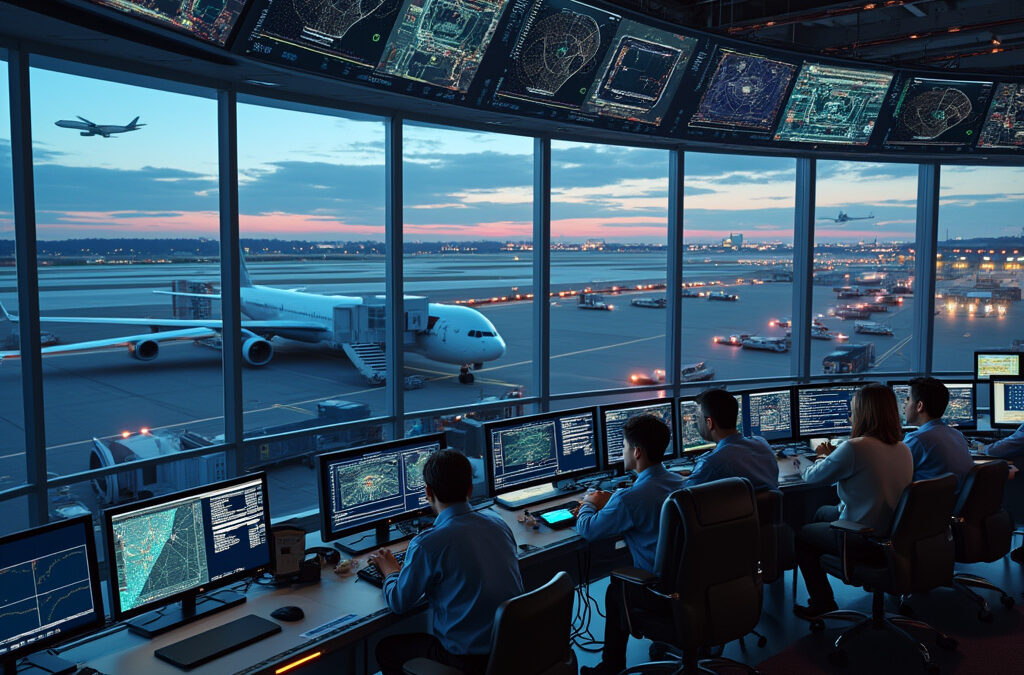
The White House has unveiled an ambitious plan to modernize the U.S. air traffic control system, one of the largest and most complex in the world. The proposal, led by President Trump and Transportation Secretary Sean Duffy, aims to address decades of outdated technology and growing concerns over safety, delays, and system inefficiencies.
The current system, operated by the Federal Aviation Administration (FAA), relies on hardware and software dating back to the 1960s. These antiquated systems often cause travel disruptions, such as ground stops and delays, while increasing the risk of failures and outages. Despite its fundamental safety, experts warn that the system is increasingly vulnerable and in urgent need of replacement.
Jennifer Homendy, chair of the National Transportation Safety Board (NTSB), has highlighted the risks by pointing to nearly three decades of unimplemented safety recommendations. These include outdated weather reporting infrastructure and basic technology at control towers, which leave the system ill-equipped to handle modern demands.
The proposed overhaul targets the core infrastructure of the air traffic control system, with the goal of completing sweeping upgrades within three to four years—a significant acceleration compared to previous projections that pushed completion into the 2030s. Key elements of the plan include:
- Replacing analog radios and legacy systems with modern, Voice over IP (VoIP)-capable equipment.
- Digitizing outdated paper-based processes, such as flight strips.
- Installing state-of-the-art fiber, wireless, and satellite networks to support over 30,000 services across more than 4,600 air traffic control sites.
- Purchasing roughly 25,000 new radios, 600 radars, and 475 voice switches to replace aging equipment.
- Streamlining legacy automation and data systems into two common platforms for a unified technological backbone.
- Building six new air traffic control coordination centers—the first in six decades—to modernize and expand operational capacity.
- Upgrading or replacing towers and TRACONs (Terminal Radar Approach Control facilities) with standardized hardware and software nationwide.
Secretary Duffy has called on Congress to allocate all funding for the project upfront to avoid political and bureaucratic delays. The administration has committed to providing quarterly updates to ensure accountability and transparency throughout the process.
Cost estimates for the overhaul vary, with industry groups suggesting at least $30 billion is needed for full improvements. While the House Transportation and Infrastructure Committee has proposed $12.5 billion, an additional $18.5 billion in emergency funding is expected to be necessary over the next three years to meet modernization goals.
Safety officials and industry groups have strongly endorsed the plan, emphasizing its potential to eliminate risks and achieve zero-accident aviation. The proposal is seen as a critical step toward improving safety, reducing delays, and securing the future of American aviation for decades to come.
The modernization effort goes beyond mere technological upgrades, aiming to future-proof the air traffic control system by incorporating advanced digital solutions and expanding operational capacity. A key focus of the plan is to address the growing demand for air travel, which is expected to rise significantly over the next decade. By implementing these upgrades, the administration hopes to reduce congestion, minimize delays, and enhance the overall efficiency of the national airspace system.
One of the most significant aspects of the overhaul is the transition to NextGen, a long-delayed modernization initiative first proposed in the early 2000s. While some components of NextGen have been implemented, many critical upgrades remain unfinished, leaving the system fragmented and inefficient. The new plan seeks to accelerate and complete NextGen’s implementation, ensuring that all air traffic control facilities are equipped with cutting-edge tools and interconnected systems.
The human factor is also a critical component of the modernization plan. Thousands of air traffic controllers and technicians will need to be trained on the new systems to ensure a smooth transition. The FAA has committed to establishing advanced training programs and simulation centers to prepare its workforce for the digital transformation. Additionally, the plan includes initiatives to attract and retain top talent in the field of aviation technology, addressing concerns about staffing shortages in the coming years.
Environmental benefits are another key consideration of the modernization effort. By streamlining air traffic management and reducing inefficiencies, the new system is expected to lower fuel consumption and greenhouse gas emissions. More precise routing and altitude control, enabled by advanced automation, will help airlines operate more sustainably, aligning with broader climate goals set by the administration.
The plan also emphasizes the importance of resilience and cybersecurity in the modernized system. As air traffic control becomes increasingly reliant on digital systems, protecting against cyber threats and ensuring uninterrupted operations becomes paramount. The proposed overhaul includes robust cybersecurity measures, such as advanced threat detection, encryption, and regular system updates, to safeguard the nation’s aviation infrastructure.
Looking ahead, the administration has outlined a clear vision for the future of air traffic control, one that prioritizes innovation, safety, and efficiency. By replacing outdated systems with modern, scalable technology, the U.S. aims to maintain its leadership in global aviation while setting a new standard for safety and performance. The success of this initiative will depend on bipartisan support, timely funding, and collaboration between government agencies, industry stakeholders, and aviation experts.
Conclusion
The White House’s ambitious plan to modernize the U.S. air traffic control system represents a critical step toward enhancing safety, efficiency, and sustainability in American aviation. By addressing decades of outdated technology and implementing cutting-edge solutions, the initiative aims to eliminate risks, reduce delays, and future-proof the system for generations to come. The success of this overhaul will depend on timely funding, bipartisan support, and collaboration among government agencies, industry stakeholders, and aviation experts. This modernization effort not only ensures the U.S. remains a global leader in aviation but also paves the way for a safer, more efficient, and environmentally friendly air travel experience.
Frequently Asked Questions
What are the main goals of the air traffic control modernization plan?
The primary objectives are to replace outdated technology, enhance safety, reduce delays, and increase system efficiency. The plan also aims to future-proof the system and expand operational capacity to meet growing demand.
What technologies are being implemented in the modernization effort?
The plan includes transitioning to Voice over IP (VoIP) equipment, digitizing paper-based processes, installing advanced fiber and wireless networks, and deploying state-of-the-art automation and data systems. It also involves completing the NextGen initiative, which introduces cutting-edge tools and interconnected systems.
How long will the modernization project take?
The administration aims to complete the sweeping upgrades within three to four years, significantly accelerating previous projections that pushed completion into the 2030s.
How much funding is required for the modernization?
Cost estimates vary, with industry groups suggesting at least $30 billion for full improvements. The House Transportation and Infrastructure Committee has proposed $12.5 billion, with an additional $18.5 billion in emergency funding expected over the next three years.
What are the environmental benefits of the modernization plan?
By streamlining air traffic management and reducing inefficiencies, the new system is expected to lower fuel consumption and greenhouse gas emissions. More precise routing and altitude control will help airlines operate more sustainably.
How will the modernization plan address cybersecurity threats?
The proposed overhaul includes robust cybersecurity measures, such as advanced threat detection, encryption, and regular system updates, to safeguard the nation’s aviation infrastructure.