
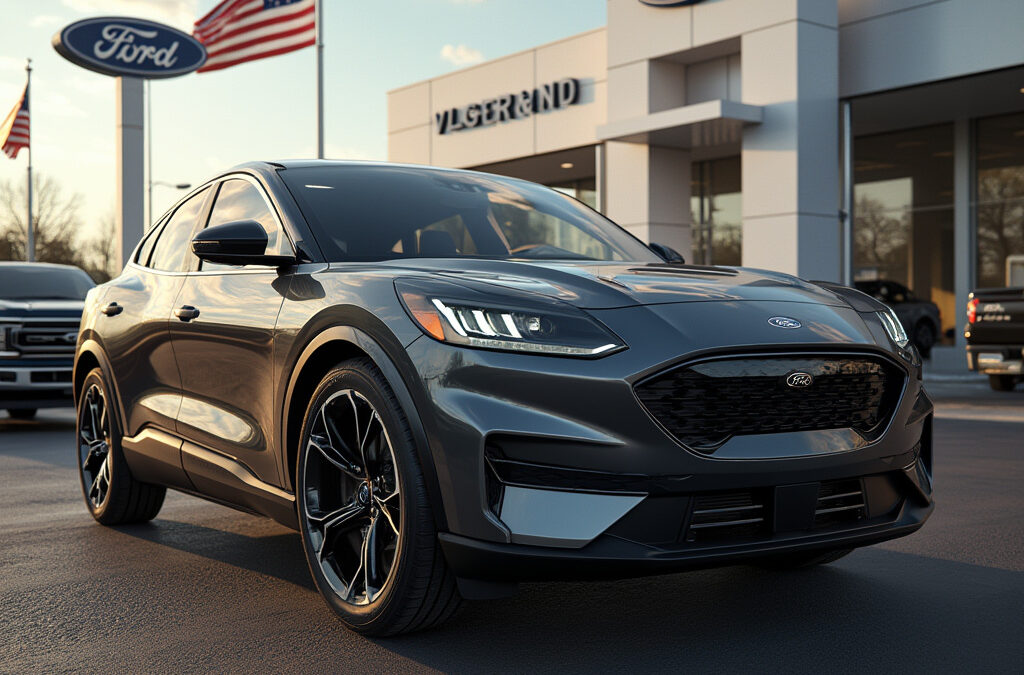
Ford Jacks Up Prices on Mexico-Made Models, Citing Tariffs
Ford Motor Company has announced significant price increases on three popular vehicle models manufactured in Mexico. The decision comes in response to tariffs imposed by President Donald Trump, impacting the automotive industry.
The affected models include the Mustang Mach-E electric SUV, Bronco Sport, and Maverick pickup truck. Prices for these vehicles will rise by up to $2,000, depending on the model and trim level.
The price hikes will apply exclusively to vehicles built after May 2, 2025, with the first affected models expected to arrive at dealerships in late June. Vehicles already at dealerships or in transit will remain at their current prices.
Ford described the price adjustments as “usual mid-year pricing actions combined with some tariffs we are facing.” The company emphasized that it has not passed on the full cost of the tariffs to consumers.
For example, the Bronco Sport Heritage will see a $600 increase, while the Maverick XLT AWD will rise by $700. These changes reflect Ford’s effort to balance rising costs without fully burdening customers.
Ford is among the first major automakers to implement price increases following the 25% tariff on all imported cars. The company anticipates a $1.5 billion hit from tariffs this year, leading it to withdraw its full-year financial guidance due to ongoing uncertainty.
The financial impact is already visible. In the first quarter of 2025, Ford’s net income dropped by approximately two-thirds, and revenue declined by 5%. General Motors is also bracing for tariff-related costs, estimating a potential $4 billion to $5 billion impact this year.
Despite the price increases, Ford is offering some relief to consumers. The company has extended its “employee pricing” offer through July 4, 2025, as part of its “From America, For America” campaign. This discount will still apply to the affected vehicles, providing some respite for buyers.
President Trump has also announced relief measures, including reimbursements for domestic car producers that import parts. However, the specifics of these measures remain unclear, leaving the industry in a state of flux.
The auto industry continues to navigate these challenging economic conditions. New tariffs on parts used in U.S.-built cars and trucks are expected to further increase production costs, adding another layer of complexity for manufacturers and consumers alike.
For more details on this story, visit Inc.com.
Industry Reactions and Future Implications
The automotive industry is bracing for the broader impact of the tariffs, with experts predicting a ripple effect across the supply chain. As Ford and General Motors navigate these changes, other manufacturers are closely monitoring the situation, considering similar price adjustments or strategic shifts in production.
Analysts suggest that while the immediate impact is on pricing, the long-term effects could influence manufacturing strategies, potentially leading to a reevaluation of production locations. This might encourage more domestic production to mitigate tariff risks, though such shifts could be costly and time-consuming.
Consumers, while benefiting from relief programs like Ford’s extended employee pricing, may still face higher costs. The industry’s response will be crucial in balancing profitability with consumer affordability, possibly through innovation or efficiency improvements to offset tariff expenses.
As the situation evolves, policymakers and industry leaders are urged to seek solutions that minimize economic disruption. The automotive sector’s resilience will be tested as it adapts to new financial and regulatory challenges, aiming to sustain growth amidst uncertainty.
Conclusion
Ford’s decision to increase prices on its Mexico-made models, including the Mustang Mach-E, Bronco Sport, and Maverick, is a direct response to the 25% tariffs on imported vehicles. While the company has not passed on the full cost of the tariffs to consumers, the price hikes reflect the growing financial pressures facing the automotive industry. Ford’s strategy to balance rising costs with consumer affordability, coupled with relief measures like the extended “employee pricing” offer, aims to mitigate the impact of these changes.
The broader implications of the tariffs extend beyond Ford, with General Motors and other manufacturers also bracing for significant financial impacts. As the industry navigates this challenging landscape, manufacturers may reevaluate production strategies to reduce reliance on imported vehicles. Consumers, while facing higher prices, may benefit from industry adaptations such as domestic production expansion or innovative cost-saving measures.
The situation remains fluid, with policymakers and industry leaders urged to find solutions that minimize disruption. As the automotive sector adapts to new financial and regulatory challenges, the focus will remain on sustaining growth and affordability in an uncertain environment.
Frequently Asked Questions
Why is Ford increasing prices on its Mexico-made models?
Ford is increasing prices on its Mexico-made models due to the 25% tariffs imposed on imported vehicles. These tariffs have significantly increased the company’s costs, leading to price adjustments on select models.
Which models are affected by the price increase?
The affected models include the Mustang Mach-E electric SUV, Bronco Sport, and Maverick pickup truck. Price increases range from $600 to $2,000, depending on the model and trim level.
When will the price increases take effect?
The price increases will apply to vehicles built after May 2, 2025. Vehicles already at dealerships or in transit will retain their current prices.
Is Ford the only automaker affected by the tariffs?
No, General Motors is also anticipating significant tariff-related costs, estimated at $4 billion to $5 billion for 2025. Other manufacturers may follow with similar pricing adjustments or production strategy changes.
Is there any relief available for consumers?
Yes, Ford has extended its “employee pricing” offer through July 4, 2025, as part of its “From America, For America” campaign. This discount applies to the affected vehicles, providing some relief to buyers.
What are the long-term implications of these tariffs?
The tariffs may lead to shifts in manufacturing strategies, with companies potentially moving production to domestic facilities to avoid tariff risks. This could result in changes to production locations and innovation in cost-saving measures.